When comparing quotations for a new outdoor shelter, choosing the lowest price can seem like the obvious way to control costs. But if two shelters have different materials, capacities, installation requirements or security features, the headline prices are not really comparing the same thing.
For facilities managers, estates teams, schools, procurement professionals and businesses, the better question is:
Which shelter provides the right specification and best overall value for our site?
The cheapest shelter may genuinely be the right choice. But a lower purchase price is only good value when the shelter is suitable for its intended use, site and longer-term requirements.
Why Isn’t the Cheapest Shelter Always the Best Value?
The cheapest outdoor shelter is not always the most cost-effective because purchase price is only one part of the overall cost. Installation, ground preparation, maintenance, repairs, capacity, security and future requirements can all influence the real cost of a shelter over time.
This is the principle behind whole-life costing.
Rather than asking only, “How much does the shelter cost?”, consider:
Purchase price + installation + site requirements + maintenance + repairs + suitability over time.
This does not mean buying the most expensive shelter. It means comparing options on a like-for-like basis and understanding what you are actually getting for your money.
1. Make Sure You’re Comparing Like for Like
Two shelters may look similar online while having significantly different specifications.
Before comparing quotations, check:
- dimensions and stated capacity;
- frame construction and finish;
- glazing material and thickness;
- racks or stands included;
- security features;
- fixing requirements;
- delivery and assembly;
- installation;
- required groundworks;
- accessories and optional extras.
This is particularly important when comparing cycle shelters, because the cheapest shelter price may not include everything needed to create a complete cycle-parking area.
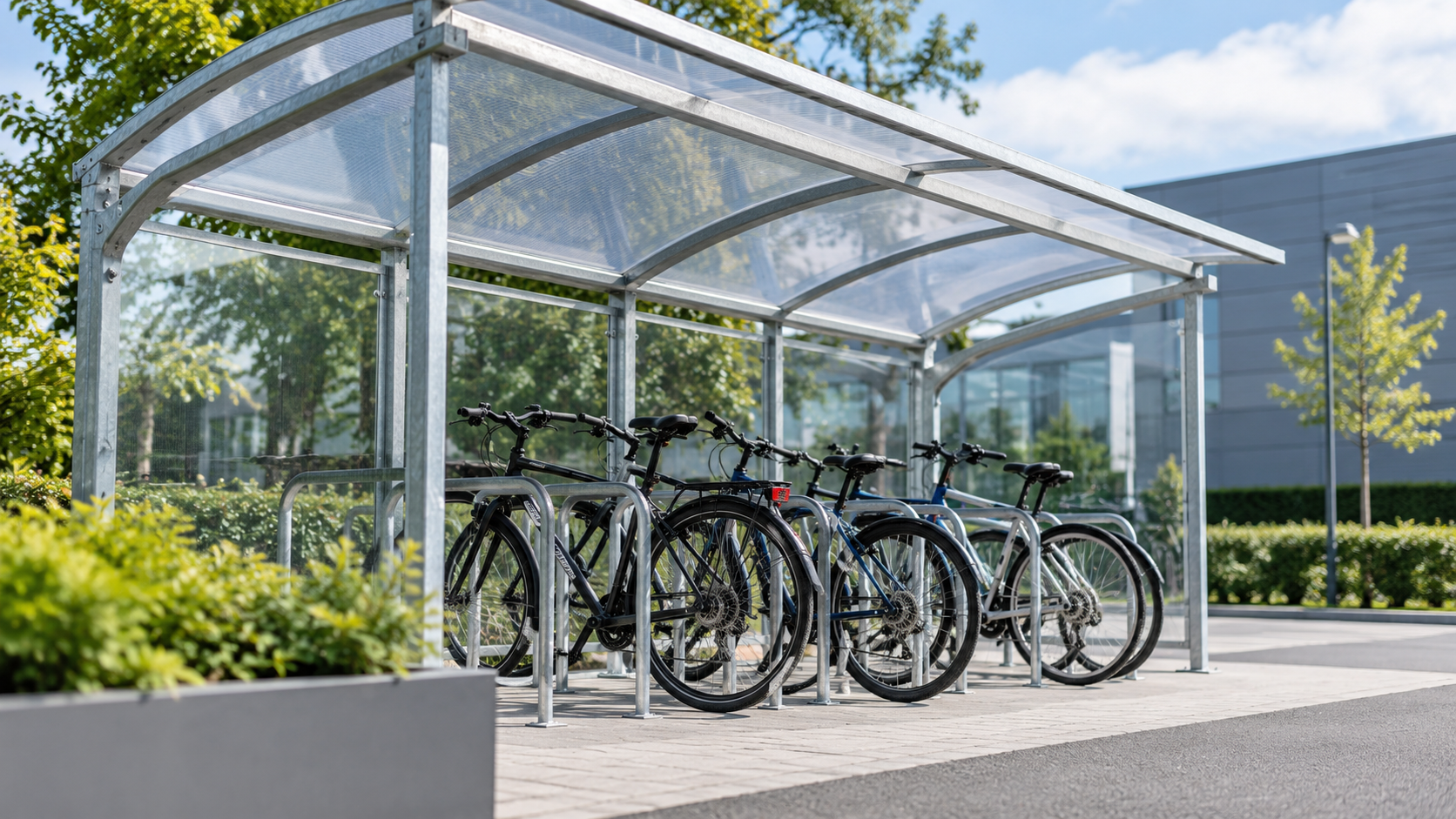
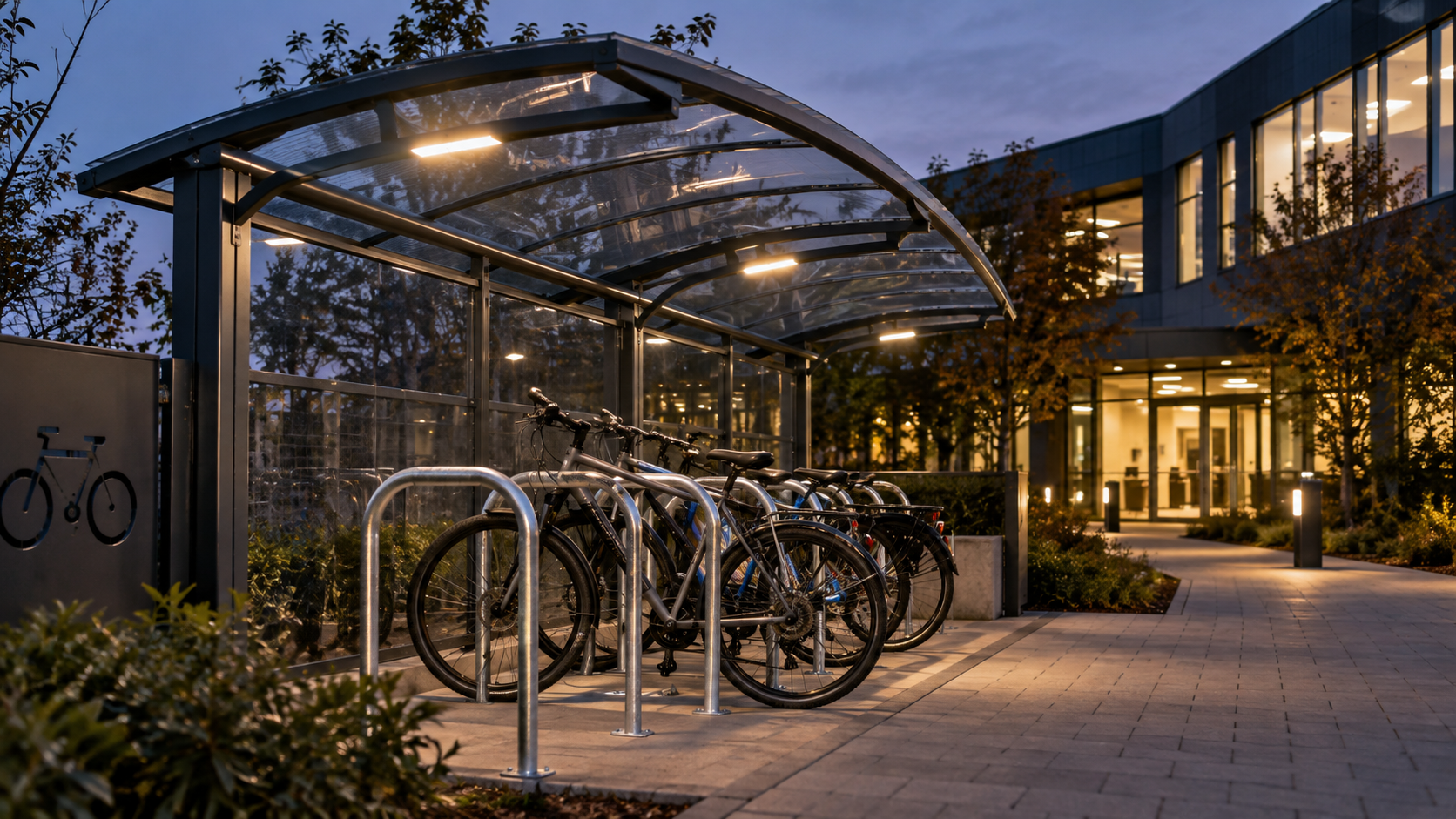
For example, Tamstar’s Sigma 20–40 Cycle Shelter includes a cycle rack system. Its published specification includes a galvanised finish as standard, optional polyester powder coating and 4mm clear PETG roof glazing. Onsite assembly and installation are also available.
The point is not that every site needs that specification. It is that procurement teams should compare the complete scope of supply, rather than the headline price alone.
2. Look Closely at Materials and Construction
An outdoor shelter spends its working life exposed to the elements. Rain, sunlight, temperature changes and everyday use all place demands on its components.
That makes construction an important part of the buying decision.
Many Tamstar shelter products use galvanised steel. Galvanising provides steel with a protective zinc coating that helps protect it against corrosion.
Glazing also varies between shelter designs. Tamstar products use materials including PETG and polycarbonate, with thicknesses and configurations depending on the individual model.
Rather than accepting broad descriptions such as “heavy duty” or “commercial quality”, ask what is actually specified.
What is the frame made from? How is it protected? What type of glazing is fitted? How thick is it? Can individual panels be replaced if damaged?
These details make it easier to understand why apparently similar quotations may differ.
3. Choose the Right Capacity, Not Simply the Lowest Price
Capacity can have a major influence on long-term value.
Buying more capacity than you are ever likely to use wastes budget. Buying too little can create another problem: the organisation may need additional cycle storage or another shelter sooner than expected.
For cycle-storage projects, consider current usage alongside realistic future demand.
Tamstar supplies solutions ranging from Sheffield cycle stands and smaller shelters through to higher-capacity cycle shelters and secure compounds.
The Sigma, for example, is available in 20- and 40-cycle configurations, while other Tamstar products cater for smaller requirements.
The best-value solution is therefore not necessarily the largest or smallest. It is the one appropriately sized for the organisation and the available site.
4. Factor Installation Into the Real Project Cost
A shelter quotation does not always represent the complete installed cost.
The condition and layout of the site can make a significant difference.
Consider whether the proposed location has a suitable base, whether ground preparation is required, how the shelter will be anchored and whether there are underground services, drainage issues or access restrictions to consider.
Pedestrian routes and vehicle movements may also affect where a shelter can sensibly be installed.
Tamstar provides an outdoor shelter installation service and offers onsite installation for relevant shelter products.
When comparing quotations, establish clearly whether delivery, assembly, fixings, installation and any required groundworks are included or separate.
A shelter with a lower product price may not be the cheaper completed project.
5. Match Security to the Site
For cycle storage in particular, security requirements should be considered before comparing products.
Not every organisation needs an enclosed compound.
A covered cycle shelter with appropriate stands may be suitable for many workplaces, schools and controlled sites. In locations where bicycles are stored for longer periods, or access needs tighter control, a secure compound may be more appropriate.
Tamstar offers conventional bike shelters and cycle storage alongside lockable cycle compounds.
The important point is to define the requirement first.
Comparing the price of an open shelter with a secure compound is of limited value if the site actually requires controlled access. They are solving different problems.
6. Consider Maintenance and Repairability Before Buying
The cost of outdoor infrastructure does not end on installation day.
Glazing can become damaged. Components can suffer accidental impacts. Fixings may require attention, and shelters should be inspected periodically so developing problems can be identified.
That makes repairability worth considering when buying a new shelter.
Useful questions include:
Can individual panels be replaced?
Are replacement components available?
Can damaged parts be repaired without replacing the whole structure?
How straightforward will the shelter be to inspect and maintain?
These questions may seem less important when comparing new products, but they can become very important several years later.
Tamstar also provides cycle shelter refurbishment for suitable existing structures, including work involving replacement glazing.
Where the main structure remains serviceable, targeted repairs may sometimes make more commercial sense than complete replacement. Conversely, serious structural deterioration, unsuitable foundations, insufficient capacity or a design that no longer meets the site’s requirements may make replacement the better option.
The sensible approach is:
Assess → retain what remains serviceable → repair or refurbish where appropriate → replace where necessary.
7. Make Sure the Shelter Solves the Actual Problem
One of the easiest ways to waste money is to buy a shelter before properly defining what the site needs.
A cycle-storage project might require greater capacity, better weather protection, improved security or a combination of all three.
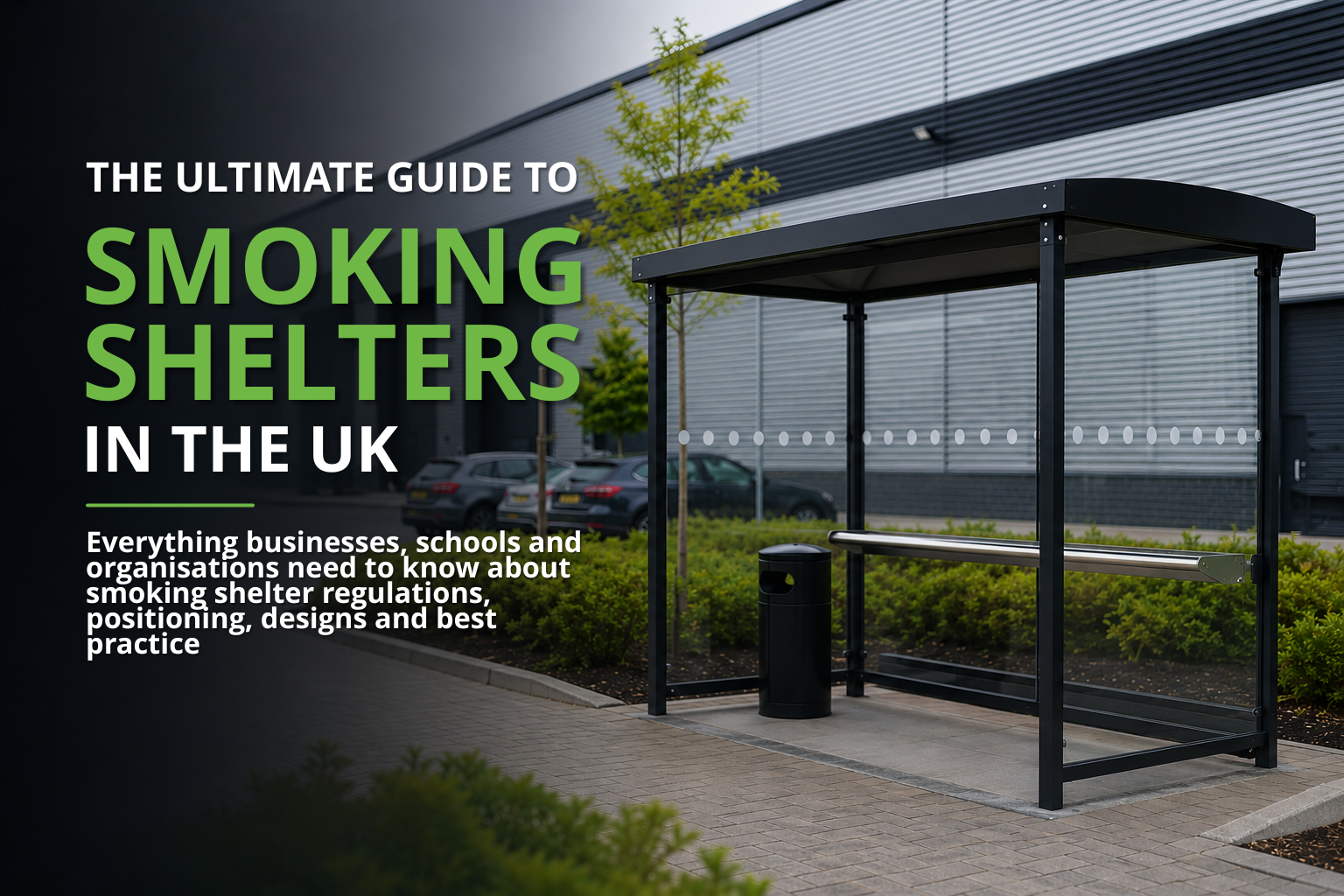
A smoking-shelter project presents different considerations. The number of expected users, available outdoor space, site layout and whether a freestanding or wall-mounted design is more suitable can all affect the choice.
Tamstar offers both freestanding smoking shelters and wall-mounted smoking and vaping shelters, allowing different site constraints to be considered.
For unusual locations or requirements, a bespoke shelter solution may also be worth assessing rather than compromising with a standard design that does not properly fit the brief.
The cheapest solution becomes expensive if it solves the wrong problem.
How Should You Compare Shelter Quotations?
A good quotation comparison should go beyond putting three prices next to one another.
Create a consistent specification and ask each supplier to price against it. Then compare:
| Considerations: | What to check |
| Capacity | Does it accommodate the required number of users or cycles? |
| Construction | What frame, finish and glazing are specified? |
| Included Equipment | Are racks, stands, seating or accessories included? |
| Site requirements | What base, foundations or preparation are needed? |
| Installation | Are delivery, assembly, fixings and installation included? |
| Security | Is the level of protection appropriate for the location? |
| Maintenance | Can components be inspected, repaired and replaced? |
| Future needs | Is there likely to be a requirement for additional capacity? |
Once these factors have been established, the lowest quotation may still be the best choice.
The difference is that it has won on overall suitability and value, rather than price alone.
Frequently Asked Questions
Why are some outdoor shelters more expensive than others?
Prices vary according to factors such as size, capacity, construction, glazing, security features, finish, accessories and installation requirements. Compare the complete specification and scope of supply rather than assuming similarly sized shelters are equivalent.
What should be included when comparing commercial shelter quotations?
Check the shelter specification, dimensions, capacity, delivery, fixings, installation, racks or stands, accessories and any required groundworks. A like-for-like comparison makes it easier to identify genuine value.
Is galvanised steel suitable for outdoor shelters?
Galvanising is widely used to protect steel against corrosion by applying a protective zinc coating. Many Tamstar shelters use galvanised steel, but buyers should always check the specification of the individual product they are considering.
Is a secure cycle compound better than a standard cycle shelter?
Not automatically. The appropriate solution depends on capacity, location, access and security requirements. A standard covered shelter may be sufficient for one site, while another may benefit from a lockable compound.
Is it better to refurbish an existing shelter or replace it?
It depends on its condition and suitability. If the underlying structure remains serviceable, targeted repairs or replacement glazing may be worth considering. Significant structural deterioration, inadequate capacity, unsuitable foundations or changing site requirements may make replacement more appropriate.
How do I choose the most cost-effective outdoor shelter?
Start with the site’s requirements rather than the lowest price. Compare capacity, materials, security, installation, maintenance and future needs. The most cost-effective shelter is the one that provides the appropriate specification and overall value for the project.
Look Beyond the Headline Price
There is nothing wrong with looking for a competitive price. Facilities and procurement teams have budgets to manage, and paying for features that a site does not need makes little sense.
But lowest price and best value are not always the same thing.
A well-chosen outdoor shelter should be appropriate for its users, location, capacity, security requirements and installation conditions. Understanding those factors before comparing quotations makes it much easier to identify where genuine value lies.
Tamstar supplies smoking shelters, cycle shelters, bike storage, secure cycle compounds and bespoke outdoor shelter solutions for organisations across the UK.
If you’re planning a new shelter project or comparing quotations, contact Tamstar to discuss your site, capacity and installation requirements and identify a suitable solution for your project.