Installing a cycle shelter is about more than finding an unused area of ground and putting a structure on it. The location of your cycle shelter can have a major impact on how often it is used, how secure cyclists feel leaving their bikes there and how easily people can move between the shelter and the building.
Whether you are planning cycle parking for a school, workplace, hospital, warehouse, leisure facility or public-sector site, choosing the right location should therefore be one of the first decisions you make.
So, where is the best place to install a cycle shelter?
1. Keep the Cycle Shelter Close to the Building
Convenience matters.
A cycle shelter positioned close to the destination is far more attractive than one hidden at the far end of a site. After cycling to work or school – particularly in wet British weather – few people want an unnecessarily long walk from their bike to the entrance.
Current Active Travel England guidance recommends that secure cycle parking should be closer to entrances than car parking spaces or pick-up and drop-off points at shops and community facilities. Long-stay cycle parking should also be easy to access, covered and well overlooked.
For schools, workplaces and other busy sites, this means looking carefully at the routes people naturally use when arriving by bicycle.
The most convenient location is not necessarily directly outside the front door, but cyclists should be able to reach the shelter quickly and without taking a lengthy detour.
2. Choose a Visible, Well-Overlooked Location
Cycle shelter security is one of the most important considerations when deciding where to install a bike shelter.
Department for Transport cycle infrastructure guidance highlights the importance of cycle parking being overlooked, well maintained, well-lit and integrated into its surroundings.
Avoid positioning cycle storage in an isolated corner simply because there happens to be spare space available.
Where practical, consider a position that benefits from natural surveillance from:
- building entrances and reception areas
- occupied offices or classrooms
- pedestrian routes
- security personnel
- CCTV systems.
People are generally more comfortable leaving their bicycles somewhere that feels visible and secure.
For long-stay cycle parking at workplaces, schools and similar facilities, additional security measures such as controlled access or CCTV may also be appropriate.
3. Make the Route to the Cycle Shelter Safe
Don’t look at the shelter location in isolation. Think about how cyclists will actually reach it.
A beautifully designed cycle shelter loses much of its value if users have to negotiate a busy car park, delivery yard or difficult pedestrian area to get there.
Ideally, cyclists should have a clear and convenient route from the site’s entrance or nearby cycle infrastructure to the shelter.
Consider potential conflicts with:
- cars entering or leaving the site
- delivery vehicles
- loading bays
- buses and coaches
- pedestrians
- school drop-off and collection traffic.
At a school, for example, positioning the cycle shelter so pupils must weave through a busy parent drop-off area may create unnecessary risks. At a warehouse or industrial site, routes used by HGVs and forklifts may need particular consideration.
A good cycle shelter installation begins with understanding the whole site, rather than simply choosing where the structure will fit.
4. Don’t Block Pedestrian Routes and Entrances
Convenient cycle parking should not become an obstacle for everyone else.
The shelter, parked bicycles and people manoeuvring their bikes need sufficient space without blocking entrances, footpaths, fire exits or important pedestrian routes.
Accessibility should also be considered.
Modern cycle parking needs to accommodate a wider range of cycles, including conventional bicycles, e-bikes, cargo bikes and adapted cycles. These can require considerably more manoeuvring space than a standard bicycle.
Allowing sufficient space around the cycle shelter can therefore make the facility easier and safer for everyone to use.
5. Think About Lighting and Security After Dark
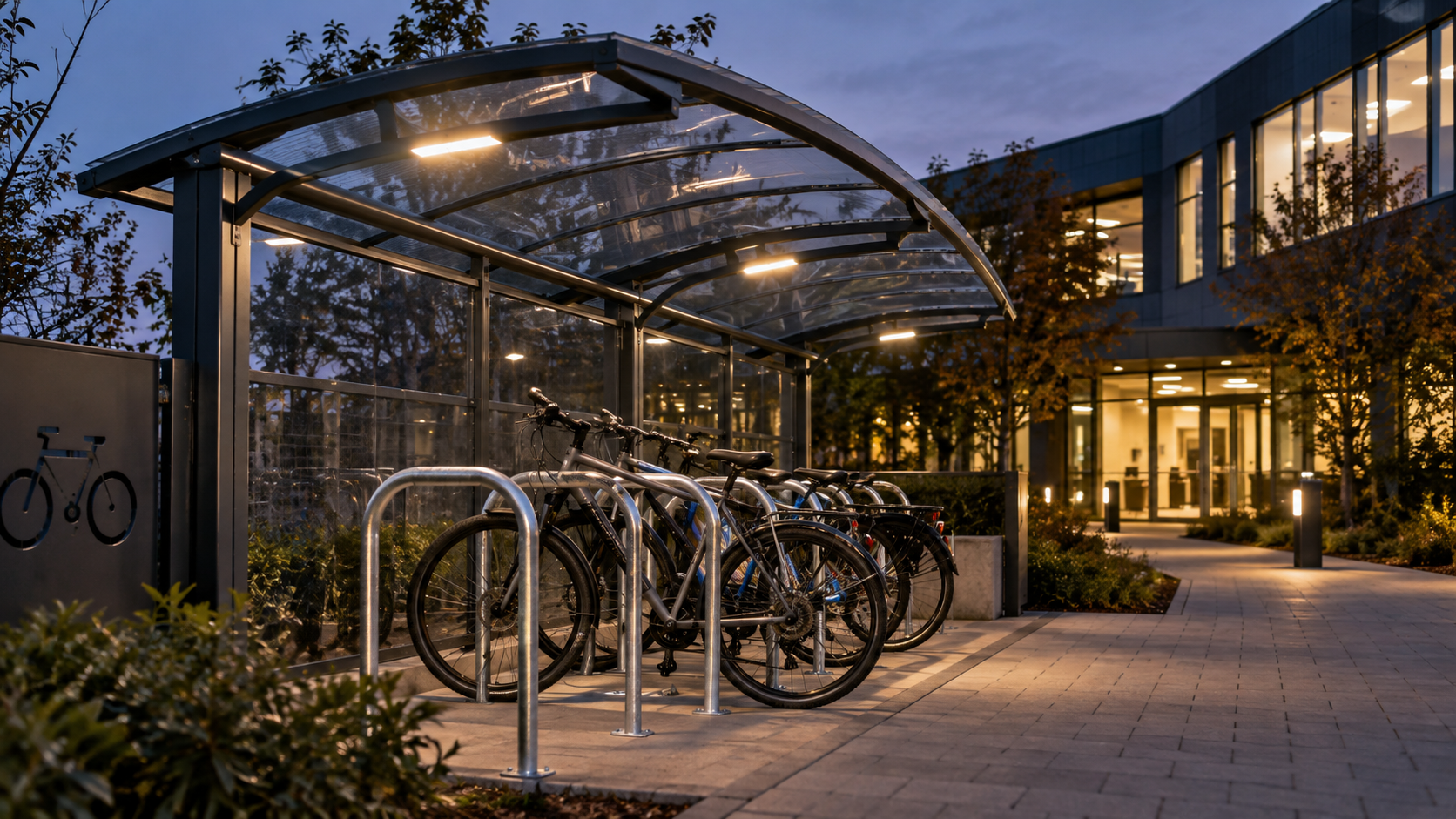
A location that works perfectly at midday may feel very different at 6 pm on a winter evening.
This is particularly important for workplace cycle shelters, hospitals, factories, warehouses and other sites where employees may arrive or leave outside normal daylight hours.
Good lighting can improve both usability and personal security.
Check the proposed location after dark where possible. Existing building lighting may provide sufficient coverage, or additional lighting may need to form part of the project.
CCTV can provide another layer of security, but good visibility and natural surveillance should still be considered when deciding where the shelter belongs.
6. Consider the Ground and Drainage
The condition of the ground is another practical consideration that is sometimes overlooked during bike shelter installation.
The location needs to be suitable for the proposed shelter, its fixing method and the cycle parking equipment inside it.
Drainage is important too.
Installing a shelter in an area where water naturally collects could leave users stepping through puddles whenever it rains. Persistent standing water can also make the area less pleasant to use and potentially contribute to deterioration around the structure.
Before installation, assess the surface, levels, drainage and any underground services that could affect the works.
7. Position the Shelter for Weather Protection
The purpose of a covered cycle shelter is to give bicycles and their users better protection from the elements, so exposure should form part of your location assessment.
Consider the direction of prevailing wind and rain, surrounding buildings and how exposed the proposed position is.
Nearby buildings may provide additional protection, while a completely open part of a site could experience considerably more wind-driven rain.
Shelter design matters here too. Roof shape, side panels and rear glazing can all influence the level of weather protection provided.
If an existing shelter has broken or missing glazing panels, weather protection can be significantly reduced. In many cases, replacing damaged panels and refurbishing the existing structure can restore its usefulness without replacing the complete shelter.
8. Allow for Future Cycle Parking Demand
Don’t only plan for the number of cyclists using your site today.
Active Travel England advises that cycle parking should account for future growth in cycling. Recent 2026 government placemaking guidance similarly emphasises planning cycle parking around realistic demand and making cycling a convenient option.
If space allows, consider whether the chosen area could accommodate additional cycle stands or an extended shelter in the future.
This is particularly relevant for schools, universities, workplaces and large commercial sites where cycling levels may increase.
Planning for expansion now can be considerably easier than relocating the entire facility later.
9. Check Planning and Site Requirements
Depending on the size, design and location of a proposed cycle shelter, planning permission or other approvals may be required.
Requirements can vary between sites and local planning authorities, so organisations should check what applies to their particular project before installation begins.
Listed buildings, conservation areas, highways considerations, underground services, boundary restrictions and site-specific planning conditions may all affect where a shelter can be positioned.
Schools, hospitals and commercial premises may also have their own safeguarding, security, access or estates requirements to consider.
What About an Existing Cycle Shelter in the Wrong Location?
Sometimes the issue isn’t installing a new shelter – it’s deciding what to do with one that already exists.
An existing cycle shelter may have been installed years ago when a site’s layout was completely different. Entrances move, buildings are extended, car parks are redesigned and cycling demand changes.
Before automatically replacing it, assess its condition.
A structurally serviceable shelter with faded paintwork, damaged glazing or missing panels may be a good candidate for cycle shelter refurbishment.
At Tamstar, existing shelters can be restored through services such as replacement glazing panels and frame recoating, helping extend their working life while reducing the need to replace the complete structure.
If the shelter is beyond economical repair, unsuitable for current requirements or genuinely in the wrong location, replacement may be the better long-term option.
Where Is the Best Location for a School Cycle Shelter?
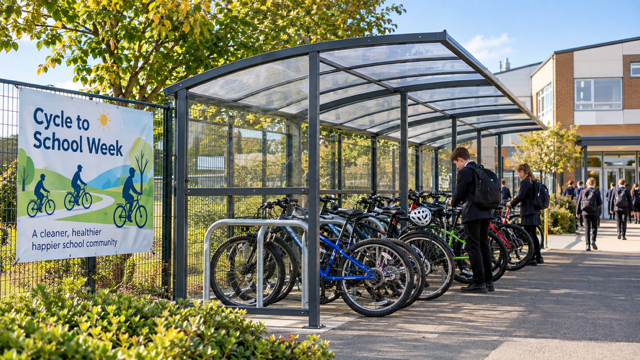
For a school cycle shelter, aim for a location that is convenient for pupils while remaining visible and secure.
Ideally, the route to the shelter should minimise interaction with busy vehicle drop-off areas. The location should also work with the school’s safeguarding and site-security arrangements.
The shelter should be easily accessible without obstructing pedestrian routes and provide enough space for pupils to manoeuvre and secure their bicycles.
For secondary schools in particular, allowing room for future expansion can be worthwhile if active travel initiatives increase the number of pupils cycling.
Where Is the Best Location for a Workplace Cycle Shelter?
For businesses, the best workplace cycle shelter location will usually combine convenience, security and easy access.
Look for an area close to a suitable staff entrance, with good natural surveillance and a straightforward route from the site entrance.
Businesses encouraging employees to cycle may also want to consider supporting facilities such as lockers, changing areas, showers and cycle maintenance equipment.
Making cycle parking genuinely convenient sends a much stronger message than installing a shelter in the least desirable corner of the car park.
Need Help With Your Cycle Shelter?
The best cycle shelter locations are convenient, accessible, visible, secure and connected to safe cycling routes.
But location is only one part of creating cycle parking people actually want to use.
The condition of the shelter matters too.
At Tamstar, we work with schools, workplaces, hospitals, councils, industrial sites and other organisations across the UK to help extend the life of existing outdoor shelters.
From cycle shelter refurbishment and replacement glazing panels to complete shelter replacement and new installations, we can help you decide whether an existing structure can be restored or whether a replacement would provide better long-term value.
If your existing bike shelter is damaged, ageing or no longer meeting the needs of your site, contact Tamstar to discuss the most practical solution.