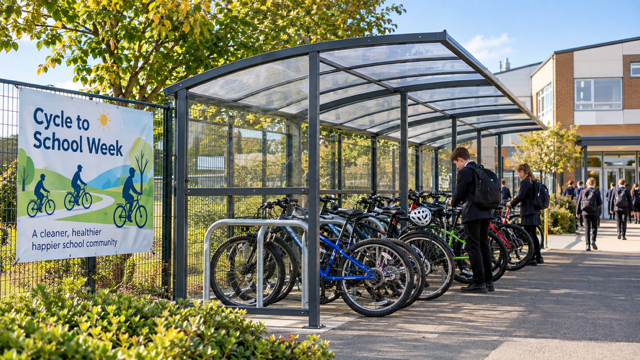
More pupils cycling to school is something to celebrate. But what happens when they arrive, and there aren’t enough spaces to park their bicycles?
Cycle to School Week 2026, taking place from 5-9 October, encourages schools and families across the UK to embrace cycling. For school business managers and facilities teams, it’s also an opportunity to ask an important question: are our cycle storage facilities ready?
From overcrowded bicycle stands to damaged bike shelters and limited weather protection, a few practical improvements can make cycling more convenient throughout the school year.
At Tamstar, we supply cycle shelters, bike sheds, scooter stands, bicycle stands, cycle compounds and storage solutions to schools and educational establishments across the UK, helping them create practical facilities that support cycling beyond a single awareness campaign.
What Is Cycle to School Week and Why Does It Matter?
Organised by the Bikeability Trust, Cycle to School Week 2026 runs from Monday 5 to Friday 9 October.
The campaign encourages children and families to discover the benefits of cycling, whether they’re already regular cyclists or considering trying it for the first time.
This year’s theme explores the real cost of the school run, including the financial, environmental and personal benefits of choosing to cycle.
Cycling provides opportunities for physical activity, helps children develop independence and can contribute to reducing vehicle congestion around school entrances.
The Bikeability Trust also provides cycle training and educational resources to help children develop practical cycling skills and confidence.
For schools, however, encouraging pupils to cycle is only part of the picture. Providing somewhere convenient and suitable to leave their bikes is equally important.
A school may have enthusiastic pupils and supportive parents, but if its bicycle parking is overcrowded, difficult to access or poorly maintained, cycling can become less practical.
How Can Schools Prepare Their Cycle Storage for Cycle to School Week?
Preparing for the campaign doesn’t necessarily require major investment. Schools can begin by reviewing their existing facilities and identifying improvements that could make bicycle parking easier.
1. Inspect existing cycle parking
Check bicycle stands, bike shelters and surrounding areas for damage, loose fittings, broken glazing or obstructions.
Make sure pupils can park and retrieve bicycles comfortably, and that existing locking points remain suitable.
If a shelter has damaged panels or loose components, arrange an appropriate inspection and repairs before encouraging additional use.
2. Review bicycle parking capacity
Consider how many pupils and staff currently cycle to school and whether existing facilities can accommodate additional cycles.
A simple count of occupied spaces over several school days can provide a useful starting point.
Schools could also ask pupils and parents whether they would consider cycling more regularly if suitable storage were available.
This information can help determine whether additional bicycle stands or a larger covered cycle shelter may be required.
3. Check access and security
Consider how pupils enter the school grounds, where they dismount and how they reach the cycle parking area.
Ideally, bike storage should be conveniently positioned without obstructing pedestrian routes or requiring pupils to cross busy vehicle access areas unnecessarily.
Suitable locking facilities and good visibility should also form part of the overall arrangement.
4. Encourage pupils and families to participate
Schools can promote Cycle to School Week through assemblies, newsletters, classroom activities and communications with parents.
The Bikeability Trust offers a free School Pledge Pack containing resources such as posters, assembly slides and activity ideas.
Schools can access these through the official Cycle to School Week website.
5. Plan improvements for the months ahead
If existing facilities are approaching capacity, the campaign provides an opportunity to begin planning longer-term improvements.
New cycle shelters may require site assessments, quotations, budget approval and installation arrangements.
Starting these discussions during Cycle to School Week allows schools to explore suitable options without rushing purchasing decisions.
How Can Tamstar Help Schools Improve Their Cycle Storage?
Every school has different requirements. A small primary school may need a compact cycle shelter, while a large secondary school or academy trust may require significantly greater capacity.
At Tamstar, we help schools large or small explore suitable cycle storage solutions based on their available space, intended usage and practical requirements.
Covered cycle shelters for pupils and staff
Leaving bicycles outdoors throughout the school day exposes them to rain and changing weather conditions.
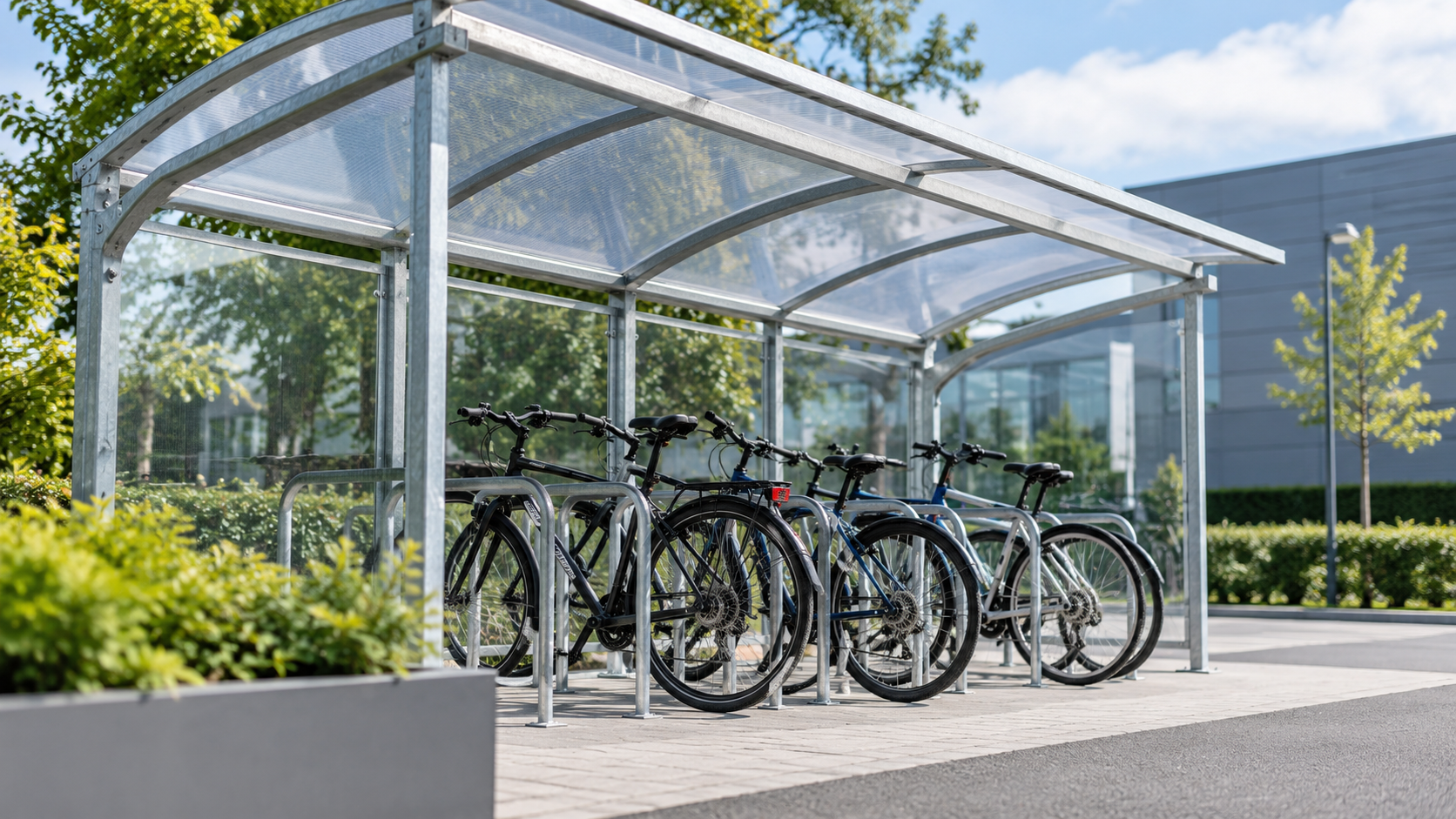
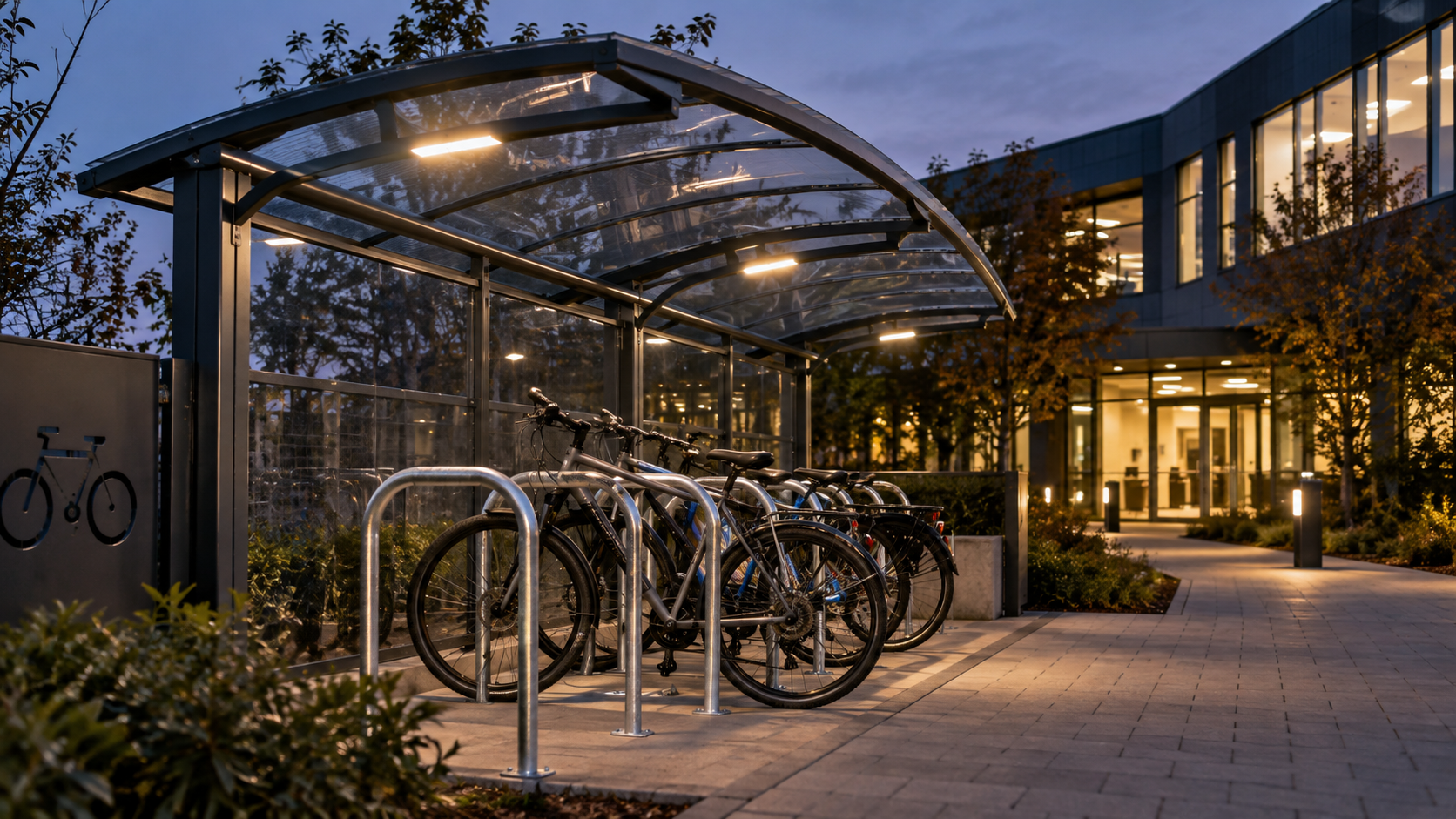
A covered cycle shelter provides a designated parking area while offering protection from direct rainfall.
It can also help keep bicycles organised rather than scattered around school grounds.
Tamstar supplies a range of cycle shelters and bicycle storage solutions, including options suitable for smaller schools and larger educational establishments.
When choosing a shelter, schools should consider current demand, available space, weather protection and the possibility of future expansion.
Secure bicycle storage and stands
For parents and pupils, knowing that bicycles can be secured appropriately during the school day is an important consideration.
Depending on the site, schools may benefit from cycle stands, covered racks or lockable bike storage compounds.
The appropriate solution will depend on the number of bicycles, available space and level of security required.
While no storage arrangement can eliminate the risk of theft, suitable locking points, visibility and thoughtful positioning can help manage that risk.
Making better use of available outdoor space
Not every school has extensive outdoor space available for bicycle parking.
Playgrounds, pedestrian routes and vehicle access points can make choosing a suitable location more challenging.
Before selecting a shelter, schools should consider how pupils will reach it, whether there is sufficient manoeuvring space and whether the ground is suitable for installation.
For more detailed advice, read our existing guide: Where Is the Best Place to Install a Cycle Shelter?.
It explores the practical considerations involved in selecting a location, including accessibility, visibility, drainage and future capacity.
What If Your School Already Has a Cycle Shelter?
Not every school needs a completely new cycle shelter.
Existing structures may remain suitable for everyday use but require maintenance or refurbishment after years of exposure to the weather.
Common problems include damaged glazing, faded framework, loose components and general wear.
Where the underlying structure remains sound, refurbishment may be a practical, cost-effective alternative to complete replacement.
Replacing damaged glazing panels, cleaning existing framework or applying a new protective coating can help restore a shelter’s appearance and functionality.
Through Fix My Shelter, a Tamstar Ltd service, schools can explore options for repairing and refurbishing existing outdoor shelters – we offer an all-in-one solution.
A real example: Swakeleys School for Girls
At Swakeleys School for Girls in Hillingdon, several existing shelters had missing or damaged glazing panels.
Rather than replacing the entire structures, Tamstar assessed the existing frameworks and carried out glazing replacement work, including additional protective side panels.
The project was completed during the school holidays in two days, helping minimise disruption to the school’s normal activities.
The work restored weather protection and improved the usability of the existing shelters without requiring complete replacement.
The school subsequently provided positive feedback about the work and the team’s communication.
You can read the full project details in the Swakeleys School for Girls shelter refurbishment case study.
For schools reviewing ageing cycle storage, this demonstrates why assessing an existing structure before replacing it can be worthwhile.
How Can Schools Encourage Active Travel Beyond Cycle to School Week?
Cycle to School Week provides a useful starting point, but encouraging active travel throughout the academic year requires a broader approach.
Alongside Bikeability, the Walk Wheel Cycle Trust supports schools and communities in making walking, wheeling and cycling more accessible.
Formerly known as Sustrans, the charity organises initiatives such as the Big Walk and Wheel, encouraging children to make active journeys to school.
According to the Trust’s 2026 Big Walk and Wheel results, children across the UK recorded 2,439,600 active school journeys during the two-week campaign, with 782,777 children participating.
These journeys included walking, wheeling, scooting and cycling, demonstrating the scale of participation in organised active travel initiatives.
Schools can also explore the Trust’s Big Walk and Wheel programme for further information.
While organisations such as Bikeability and Walk Wheel Cycle Trust focus on participation, education and active travel, suitable infrastructure also has an important role to play.
Providing convenient bicycle parking, appropriate locking facilities and weather protection can help make cycling a more practical option for pupils and staff.
At Tamstar, our role is to support that infrastructure through practical cycle storage solutions.
What Should Schools Consider When Choosing a Cycle Shelter?
Before investing in new bicycle storage, school business managers and facilities teams should consider several important factors.
- Capacity: How many bicycles need to be accommodated, and is demand likely to increase?
- Location: Can pupils reach the shelter conveniently without crossing busy vehicle routes?
- Durability: Are the materials suitable for outdoor use and regular daily activity?
- Security: Does the proposed arrangement provide suitable locking points and visibility?
- Installation: Are the ground conditions, access arrangements and any necessary approvals suitable?
- Long-term value: How do the purchase price, durability and expected maintenance requirements compare?
Considering these factors together can help schools select facilities that meet their current requirements while allowing for future changes.
For academy trusts managing multiple sites, reviewing cycle storage across individual schools may also help identify opportunities for more coordinated facilities planning.
Frequently Asked Questions About School Cycle Storage
How many bicycle parking spaces should a school provide?
There is no single number suitable for every school. Capacity should reflect existing cycling demand, pupil and staff numbers, available space and anticipated future use. Schools should also check relevant local planning requirements when considering new facilities.
Are covered cycle shelters better than basic bicycle stands?
Both have a role. Basic stands provide designated bicycle parking and locking points, while covered shelters offer additional protection from the weather. The most suitable option depends on the school’s requirements, budget and available space.
Can an existing school cycle shelter be refurbished?
Yes, depending on its condition. Where the underlying structure remains suitable, replacing damaged glazing or restoring the framework may extend its useful life. A condition assessment can help determine whether refurbishment or replacement is appropriate.
Can Tamstar supply and install cycle shelters for schools?
Yes. Tamstar supplies bike shelters and offers installation services for suitable projects. Schools can contact our team to discuss their available space, intended bicycle capacity and installation requirements.
How can schools encourage more pupils to cycle?
Schools can promote initiatives such as Cycle to School Week, provide access to appropriate cycling information and training, and communicate with parents about active travel. Convenient bicycle parking and suitable storage facilities can also help support pupils who choose to cycle.
Make Cycle to School Week the Start of Something Bigger
Cycle to School Week lasts five days, but the opportunity to improve school cycling facilities extends far beyond the campaign.
For schools, it provides a timely reason to review existing bicycle parking, identify potential improvements and consider whether current facilities are meeting demand.
Some schools may already have sufficient storage. Others may benefit from additional cycle stands, new covered shelters or refurbishment of existing structures.
Whatever the requirements, choosing appropriate infrastructure can form part of a wider commitment to supporting active travel.
At Tamstar, we have worked for many years with schools and educational establishments across the UK to help identify practical cycle storage solutions suited to their premises.
Is your school’s cycle storage ready for the future?
Whether you need additional bicycle parking, a new covered cycle shelter or advice on improving existing facilities, our team can help you explore suitable options.
Tell us about your school, available space and intended bicycle capacity, and we can discuss suitable solutions and provide a quotation.
Explore our cycle storage range or contact Tamstar to discuss your requirements.
Because encouraging more children to cycle isn’t just about the journey to school, it’s also about making sure there’s somewhere suitable to leave their bicycles when they arrive.