Choosing the right bicycle storage for a school, workplace, or commercial site involves more than finding somewhere to park bikes. The type of storage you install can affect security, weather protection, accessibility and how conveniently people use the facilities every day.
Two common options are cycle shelters and bike sheds. Although the terms are often used interchangeably, they can describe different types of bicycle storage, each with its own advantages.
For facilities managers, school estates teams and business owners, understanding these differences can help avoid unnecessary expenditure and ensure the chosen solution meets the site’s requirements.
So, what exactly is the difference between a cycle shelter and a bike shed, and which should your organisation choose?
What Is the Difference Between a Cycle Shelter and a Bike Shed?
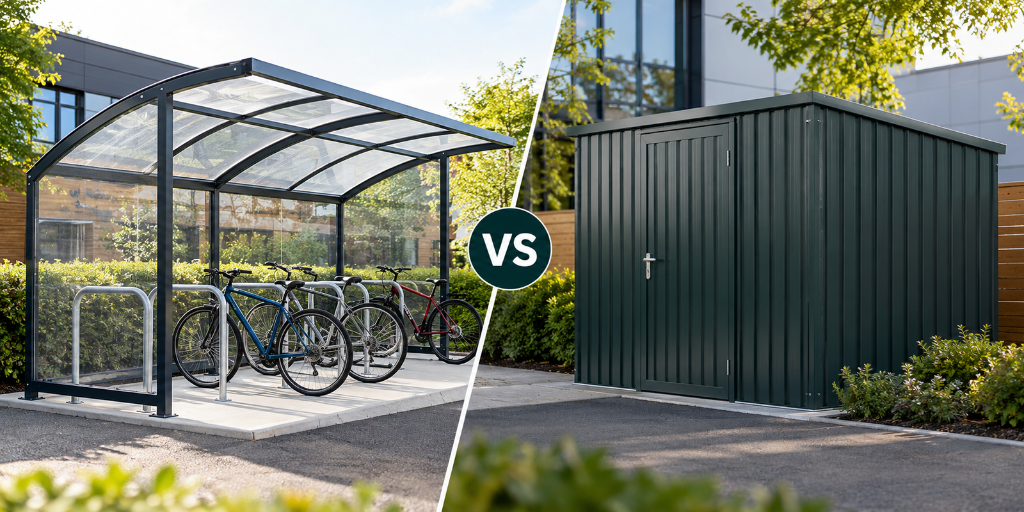
The main difference between a cycle shelter and a bike shed is typically the level of enclosure, accessibility and security.
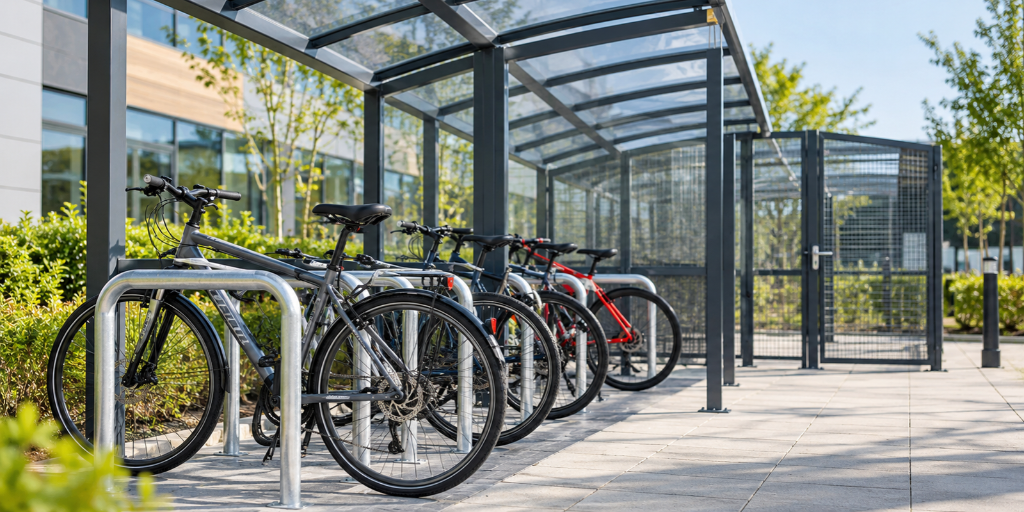
A cycle shelter is generally an open-sided or partially enclosed structure with a roof that protects parked bicycles from direct rainfall while allowing convenient access.
A bike shed is usually a more enclosed structure, often featuring walls and a lockable door to provide additional protection against unauthorised access.
However, these are not fixed technical classifications. Some cycle shelters are fully enclosed, while certain products marketed as bike sheds have more open designs.
The important distinction is therefore the structure’s actual design, security features and suitability for the intended site, rather than its name alone.
Cycle Shelters vs Bike Sheds: Key Differences at a Glance
Typical Design
- Cycle Shelter: Open or partially enclosed.
- Bike Shed: Usually enclosed.
Weather Protection
- Cycle Shelter: Roof and optional side panels.
- Bike Shed: Roof and surrounding walls.
Accessibility
- Cycle Shelter: Quick, direct access.
- Bike Shed: May require unlocking a door.
Security
- Cycle Shelter: Depends on stands, locks and location.
- Bike Shed: Can include controlled access.
Ventilation
- Cycle Shelter: Generally good.
- Bike Shed: Depends on ventilation design.
Maintenance
- Cycle Shelter: Roof, framework, panels and fixings.
- Bike Shed: Structure, doors, locks and hinges.
Typical Use
- Cycle Shelter: Schools, offices and commercial sites.
- Bike Shed: Workplaces, residential sites and controlled-access storage.
Which Should You Choose: A Cycle Shelter or Bike Shed?
The best option depends on what matters most to your organisation.
Choose a cycle shelter if:
- Cyclists need quick, convenient access throughout the day.
- You want covered parking for multiple bicycles.
- The storage area is visible or within an already controlled site.
- You need flexibility in the number or arrangement of cycle stands.
Consider an enclosed bike shed or lockable compound if:
- Bicycles are left unattended for extended periods.
- You need to restrict access to authorised users.
- The site has limited natural surveillance.
- Additional protection from wind-driven rain is important.
For larger workplaces or educational sites, a lockable cycle compound may provide a practical middle ground, combining covered bicycle parking with controlled access.
The aim is not necessarily to choose the most enclosed structure, but to select the right level of protection for the site.
What Are the Advantages of a Cycle Shelter?
Cycle shelters are particularly suitable for organisations that need accessible, covered parking for several bicycles.
Convenient Access for Everyday Cyclists
Open-sided shelters allow users to park and collect bicycles without opening doors or managing shared access systems.
This can be useful at schools and busy workplaces where several people arrive or leave at similar times.
Practical Weather Protection
A roof helps protect bicycles from direct rainfall, while side and rear panels can reduce exposure to wind-driven rain.
However, open shelters will not necessarily keep bicycles completely dry during severe weather. Their effectiveness depends on roof coverage, orientation and surrounding conditions.
Flexible Cycle Parking Arrangements
Many commercial shelters can accommodate Sheffield stands or other cycle racks, allowing organisations to choose an appropriate parking layout.
Tamstar offers a range of bike shelters and cycle storage solutions for different site requirements, from smaller workplace installations to larger educational and commercial facilities.
Explore Tamstar’s bike shelters and storage solutions.
What Are the Advantages of an Enclosed Bike Shed?
Enclosed bike sheds may be preferable where bicycles are left unattended for longer periods, or access needs to be restricted.
Additional Access Control
Lockable doors can provide an extra barrier against unauthorised entry.
However, an enclosed shed is not automatically more secure than a well-designed cycle compound. Security depends on the quality of the doors, locks, panels, anchoring and internal bicycle locking points.
Greater Protection from Exposed Weather
Enclosed structures can offer more protection against wind-driven rain and debris.
Suitable ventilation is still important to help prevent moisture and condensation from building up inside.
Controlled Storage for Regular Users
Enclosed storage may suit staff-only facilities, residential developments and other locations where access needs to be managed.
Organisations should also consider the ongoing maintenance of locks, hinges and any access-control systems.
Is a Lockable Cycle Compound Better Than a Bike Shed?
For organisations needing higher cycle capacity alongside controlled access, a lockable cycle compound may be more practical than a conventional bike shed.
A compound typically combines secure perimeter panels, lockable gates and internal cycle stands. Depending on its design, it may also include a roof for weather protection.
For example, Tamstar’s Omega Cycle Shelter Compound is designed for larger-scale bicycle storage.
The Omega Compound is a modular cycle storage solution with lockable access and integrated cycle parking arrangements. Its configuration can be selected according to the number of bicycles and the available site space.
This makes it an option worth considering for schools, workplaces and larger organisations that need organised cycle parking with restricted access.
A well-designed compound can offer a balance between capacity, weather protection and security, without requiring a conventional fully enclosed bike shed.
Explore the Omega Cycle Shelter Compound.
Which Cycle Storage Is Best for Different Organisations?
Different environments place different demands on bicycle storage.
Schools and Educational Facilities
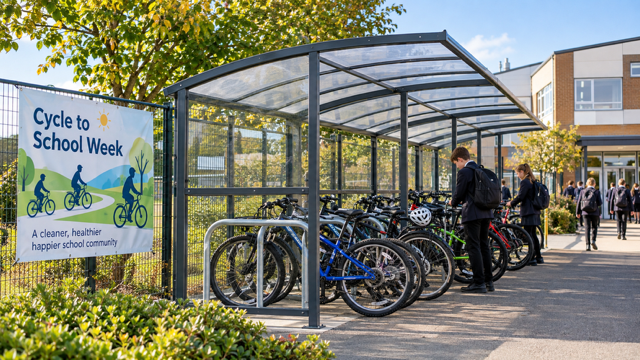
Schools often need cycle parking that pupils can access conveniently at the beginning and end of the day.
An open cycle shelter with suitable stands may work well in a supervised or clearly visible location. Where access outside school hours is a concern, a lockable compound may be preferable.
Allow enough space for pupils to manoeuvre bicycles without obstructing entrances or pedestrian routes.
Offices and Commercial Workplaces
For offices, cycle storage should make commuting by bicycle convenient rather than complicated.
An open shelter may suit staff who need regular access during the day. A lockable compound may be more appropriate where bicycles remain parked for an entire working day or where public access is difficult to control.
Warehouses and Industrial Sites
Warehouses and industrial premises need to consider vehicle movements, shift patterns and the location of staff entrances.
Cycle storage should be positioned away from loading areas and vehicle manoeuvring routes, with safe access for cyclists and pedestrians.
Both open shelters and lockable compounds can work well when properly positioned and installed.
Residential Developments
Residential cycle storage often needs to accommodate bicycles left overnight.
Enclosed sheds or controlled-access compounds may offer suitable protection, provided there is enough room for users to park and retrieve bicycles comfortably.
What Should You Consider Before Buying Cycle Storage?
Before choosing a structure, consider how the complete facility will operate.
Capacity and Spacing
Plan for current demand and reasonable future growth. Larger e-bikes, cargo cycles and adapted cycles may require additional room.
Security
Suitable Sheffield stands, secure frame-locking points and good site visibility can be just as important as the shelter itself.
Location
Position storage conveniently, with safe access routes and appropriate lighting.
For further guidance, read Tamstar’s article on secure cycle storage and site visibility.
Ground Conditions and Installation
Check the surface, foundations, anchoring requirements and drainage before ordering. These can affect both installation costs and long-term performance.
Maintenance
Consider the condition of roofs, panels, fixings, stands and any doors or locking systems.
How Much Do Cycle Shelters and Bike Sheds Cost?
There is no universal price difference between a cycle shelter and a bike shed because costs depend on size, design and specification.
An open shelter may have fewer components than a comparable enclosed structure, but a large commercial shelter with specialist racks can cost more than a small bike shed.
When comparing quotations, consider the full project cost, including the structure, cycle stands, security features, ground preparation, installation and future maintenance.
A useful comparison is the cost per usable cycle parking space, rather than simply the price of the structure. A lower-priced product may not represent better value if it provides insufficient capacity or requires upgrading shortly after installation.
Frequently Asked Questions
Do Cycle Shelters or Bike Sheds Need Planning Permission?
Planning requirements depend on the structure’s size, location, intended use and applicable local planning rules. Schools and commercial organisations should check with their local planning authority before installation where requirements are uncertain.
Can Cycle Shelters Accommodate Electric Bikes?
Many cycle shelters can accommodate electric bikes, provided there is sufficient space and suitable cycle stands. Larger or heavier e-bikes may require additional manoeuvring room. Any charging facilities should be assessed separately for electrical and fire safety.
How Many Bicycles Can a Commercial Cycle Shelter Hold?
Capacity varies depending on the shelter’s size and parking arrangement. Smaller shelters may accommodate just a few bicycles, while larger modular systems can provide substantially more spaces.
For example, Tamstar’s Omega Cycle Shelter Compound offers modular configurations for 20 to over 100 bicycles, with cycle stands included.
Can an Existing Cycle Shelter Be Upgraded Instead of Replaced?
Potentially. If the main structure remains safe and suitable, replacing damaged panels, repairing fixings or improving cycle stands may be worthwhile.
Where the structure has significant damage, unsafe foundations or insufficient capacity, replacement may be the more practical long-term solution.
Find the Right Cycle Storage Solution with Tamstar
Whether you’re planning bicycle parking for a school, office, warehouse or commercial development, the right choice starts with understanding how the facility will be used.
An open cycle shelter can provide convenient, covered parking, while an enclosed bike shed or lockable compound may be more appropriate where additional access control is needed.
At Tamstar Ltd, we supply commercial cycle shelters, bike stands and lockable cycle compounds for organisations across the UK, with installation services available.
Explore our cycle storage range or contact the Tamstar team to discuss your site’s capacity, layout and security requirements.