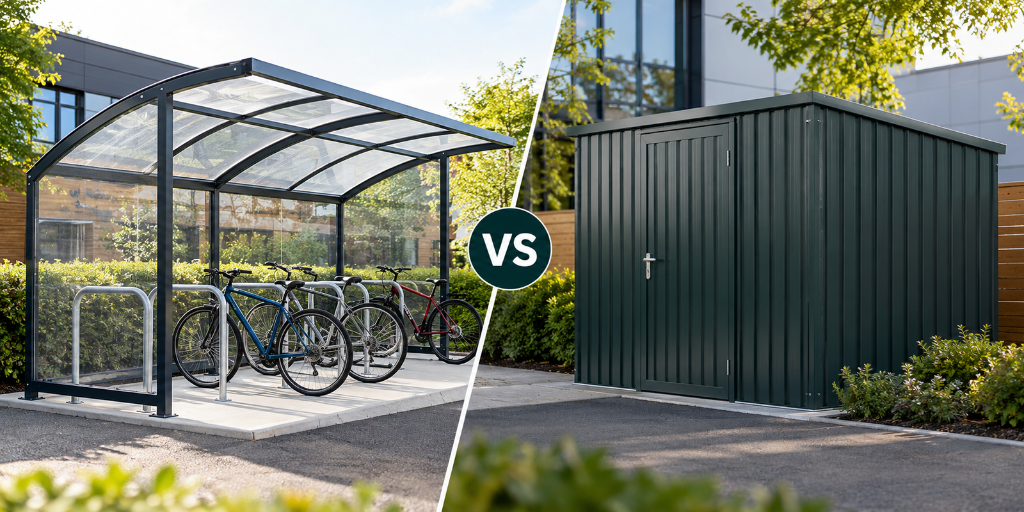
Practical ways UK employers can support year-round cycle commuting, improve workplace facilities and help employees stay motivated during the colder months.
As autumn settles in, cycling to work can become less appealing. Darker mornings, falling temperatures and unpredictable British weather often mean employees who happily cycle throughout summer start reaching for their car keys instead.
For businesses encouraging active travel, this creates a challenge. How do you help employees maintain their cycling habits when conditions become less inviting?
The answer isn’t simply to encourage staff to brave the cold. Employers need to understand the practical barriers employees face and make cycling a convenient, realistic option throughout the year.
From providing secure, covered cycle storage to improving workplace facilities and offering flexible commuting arrangements, there are several ways businesses can make a difference.
The key to encouraging winter cycling is removing everyday obstacles, supporting employee confidence and providing facilities that make commuting by bicycle easier, even when the weather changes.
1. Understand Why Employees Stop Cycling During Winter
Before investing in new facilities or launching workplace cycling initiatives, it is worth understanding what actually discourages employees.
For some, the biggest concern is travelling in darkness. Others may worry about icy roads, arriving at work with wet clothing or leaving an expensive bicycle exposed to the weather.
Employees commuting longer distances may have different requirements from those travelling just a few miles.
A short staff survey can help identify these barriers. Ask employees what would encourage them to cycle more often, whether existing bicycle parking meets their needs and what improvements they would prioritise.
This approach helps businesses direct their budgets towards changes that employees are more likely to appreciate and use.
2. Provide Secure, Weather-Protected Workplace Cycle Storage
Imagine cycling to work through persistent rain, only to discover that the designated bicycle parking is an uncovered rack at the far end of the car park.
It’s hardly an encouraging start to the working day.
Providing suitable workplace cycle storage is one of the most practical ways employers can demonstrate their commitment to year-round cycling.
A covered cycle shelter can reduce direct exposure to rainfall, while appropriate cycle stands allow employees to secure their bicycles during the working day.
However, installing a shelter is only part of the solution.
A cycle shelter’s location and ease of use can be just as important as its capacity.
For example, a shelter designed to accommodate 20 bicycles may still be underused if employees must walk a considerable distance to reach the building, navigate poorly lit pathways or struggle to manoeuvre their bikes into position.
When planning workplace cycle parking, employers should consider:
- Location: Position storage conveniently near suitable workplace entrances.
- Security: Provide appropriate stands that allow bicycles to be locked securely.
- Weather protection: Consider roof coverage, prevailing winds and exposure to rainfall.
- Accessibility: Allow sufficient space for manoeuvring bicycles, including larger or adapted cycles.
- Capacity: Plan around existing demand and potential future growth.
Tamstar supplies bike shelters and storage solutions for businesses, schools and organisations looking to improve their cycling facilities.
The objective should be to create cycle parking that employees genuinely want to use, rather than simply finding somewhere to accommodate bicycles.
3. Help Employees Feel More Confident Cycling in Darkness
Shorter daylight hours can be one of the biggest challenges for autumn and winter commuters.
Employees starting early shifts or finishing after sunset may find themselves cycling in darkness, sometimes on unfamiliar or poorly illuminated routes.
Although employers cannot control public roads, they can help employees prepare for these conditions.
The Highway Code states that bicycles used at night must have the required white front and red rear lights, along with a red rear reflector. It also provides guidance on visibility and safe cycling.
Businesses can support staff by sharing seasonal bicycle safety information, encouraging maintenance checks and providing access to cycling resources.
Workplace lighting also deserves attention.
Cycle parking areas, entrances and connecting pathways should be assessed during the hours employees actually arrive and leave.
A location that feels perfectly accessible at midday may be considerably less welcoming on a dark November evening.
For facilities managers, reviewing lighting, visibility and pedestrian access can help identify improvements that make workplace cycling more practical.
4. Make Wet-Weather Arrivals Less Inconvenient
For many employees, cycling in the rain isn’t necessarily the biggest problem. It’s arriving at work with wet clothing and nowhere suitable to change.
A lack of changing facilities can discourage commuting by bicycle, particularly in workplaces with formal dress requirements.
Where space and budgets allow, employers could provide lockers, coat hooks, private changing areas or facilities for drying wet clothing.
Showers may also be useful, particularly for employees travelling longer distances.
However, businesses don’t always need to invest in expensive facilities.
A small designated changing area and somewhere secure to store belongings may be enough to remove an everyday inconvenience.
The important thing is to understand employees’ needs and provide facilities that reflect their commuting habits.
5. Encourage Flexible Cycling Rather Than Daily Commitments
Not every winter morning is suitable for cycling.
Ice, strong winds, heavy rain and poor visibility can make certain journeys more challenging or unsafe, particularly for less experienced cyclists.
Employers should encourage sensible decisions rather than expecting employees to cycle regardless of conditions.
Where operationally possible, flexible start times may allow staff to travel during daylight or avoid particularly difficult weather.
Hybrid working arrangements can also help employees choose more suitable cycling days.
Even cycling once or twice a week during winter can help employees maintain their commuting routine.
The aim isn’t to encourage everyone to cycle every day. It’s to make cycling an accessible option whenever conditions are appropriate.
6. Introduce Cycling Incentives and Practical Support
Workplace cycling initiatives can provide additional encouragement, particularly when combined with suitable facilities.
The government’s Cycle to Work Scheme allows participating employers to offer eligible employees access to bicycles and qualifying cycling equipment through tax-advantaged arrangements, subject to scheme rules.
Businesses could also organise bicycle maintenance workshops, share local cycle routes or introduce voluntary winter cycling challenges.
A maintenance session covering brakes, tyres, lights and basic bicycle care may be particularly useful before winter.
For employees who lack confidence, Cycling UK offers information and resources to support cycling.
These initiatives can help create a positive workplace cycling culture without making participation feel compulsory.
7. Review Existing Cycle Shelters Before Investing in New Ones
Encouraging more employees to cycle doesn’t automatically mean purchasing additional infrastructure.
Existing facilities may simply need maintenance or improvements.
Autumn leaves, blocked drainage routes, damaged roof panels and loose fittings can affect the usability of outdoor cycle parking.
Before winter, facilities managers should inspect shelter roofing, fixings, bicycle stands, drainage and surrounding access routes.
Where the existing structure remains suitable, repairs or refurbishment may be appropriate. Where capacity, security or structural condition is inadequate, replacement or expansion may offer a better solution.
Tamstar’s guide to choosing the best location for a cycle shelter provides further guidance on positioning, accessibility and site planning.
The important thing is to assess what employees need before deciding whether existing facilities can be improved or new storage is required.
8. Create a Practical Winter Cycling Plan for Your Workplace
Supporting winter cycling doesn’t need to become a complicated project.
Consider a workplace with 50 employees. Some already cycle regularly, others cycle occasionally, and several would consider commuting by bicycle if suitable facilities were available.
Rather than immediately purchasing a larger shelter, the employer could begin by surveying staff, checking existing parking use and identifying the main obstacles.
A simple action plan might look like this:
First 30 days: Understand the challenges
Survey employees and inspect existing cycle parking, lighting and changing facilities. Identify the main reasons employees reduce their cycling during colder months.
Within 60 days: Make practical improvements
Address priority maintenance issues, improve access where necessary and introduce practical cycling support, such as maintenance information or seasonal safety guidance.
Within 90 days: Review progress
Gather employee feedback, monitor cycle parking usage and identify any remaining barriers that prevent employees from cycling more regularly.
Longer term: Plan future improvements
Consider whether additional cycle shelters, secure compounds or improved workplace facilities are needed based on employee demand and available space.
Businesses can also measure progress by monitoring cycle parking occupancy, gathering employee feedback and comparing participation across different seasons.
For larger organisations, these improvements can form part of a wider workplace travel plan supporting cycling, walking and public transport.
The goal is to make cycling a realistic commuting choice for more employees, for more of the year.
Frequently Asked Questions
How can employers encourage employees to cycle to work in winter?
Employers can encourage winter cycling by providing secure, covered bicycle parking, improving lighting and changing facilities, offering flexible working arrangements and introducing cycling incentives. Asking employees about their commuting challenges helps identify which improvements will make the greatest difference.
What facilities should a cycle-friendly workplace provide?
Useful facilities include secure bicycle stands, covered cycle storage, well-lit access routes, lockers and changing areas. Depending on employee needs, showers and drying facilities may also be beneficial.
Are covered cycle shelters worth providing at work?
Covered cycle shelters can make workplace bicycle parking more convenient by reducing exposure to direct rainfall. When combined with suitable locking points, accessible positioning and regular maintenance, they can help support year-round cycling.
How can businesses encourage cycling without a large budget?
Businesses can begin with staff surveys, cycling information, maintenance workshops and improvements to existing facilities. Reviewing lighting, repairing damaged stands and providing somewhere to store wet clothing may also help without requiring major investment.
How much cycle storage does a workplace need?
The appropriate capacity depends on employee numbers, shift patterns, existing cycling participation and expected future demand. Employers should assess peak parking use and allow suitable space for different bicycle types before deciding on the size of a shelter or compound.
Make Year-Round Workplace Cycling Easier With Tamstar
Encouraging employees to cycle through autumn and winter isn’t about persuading everyone to ride in bad weather. It’s about creating a workplace where cycling remains a practical, convenient and supported choice throughout the year.
For some businesses, improving lighting or changing facilities may make the biggest difference. For others, better-positioned, secure and weather-protected bicycle parking could help remove an important barrier.
At Tamstar Ltd, we supply and install cycle shelters, bike stands and secure cycle storage solutions for businesses, schools and organisations across the UK.
Whether you’re reviewing existing cycle parking or planning new facilities, our team can help you consider the available space, required capacity, access arrangements and suitable storage options.
Explore our bike shelters and storage solutions or contact Tamstar to discuss your workplace cycling requirements.