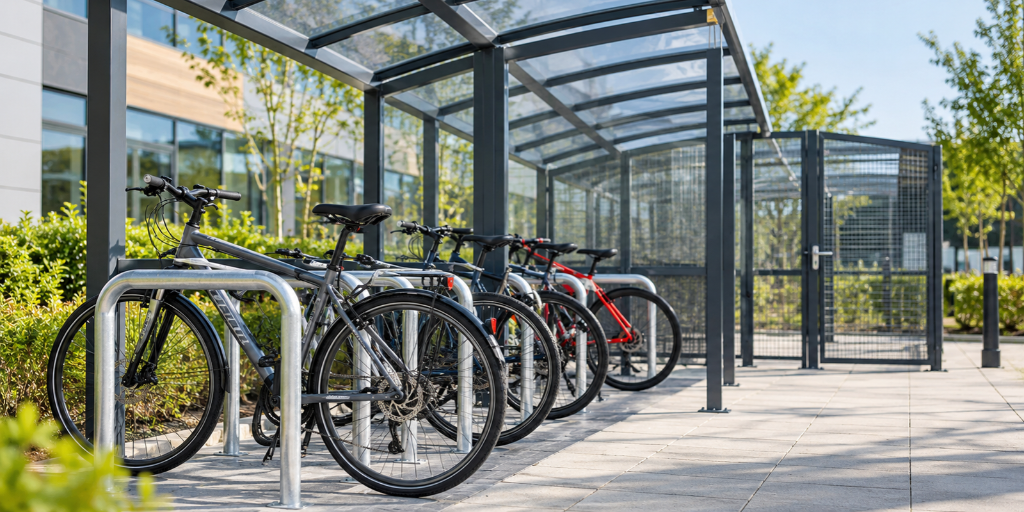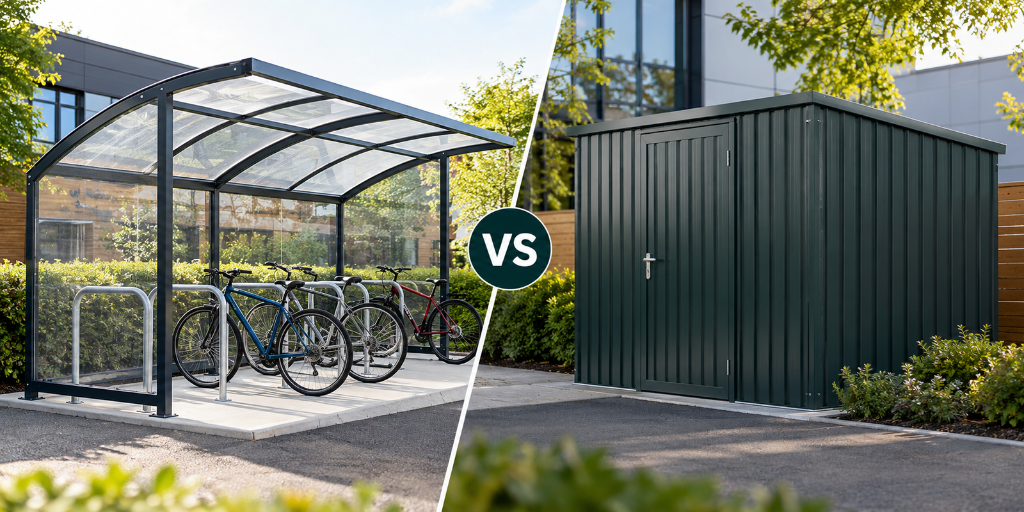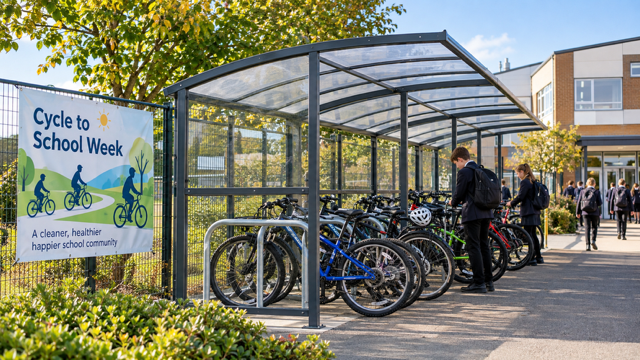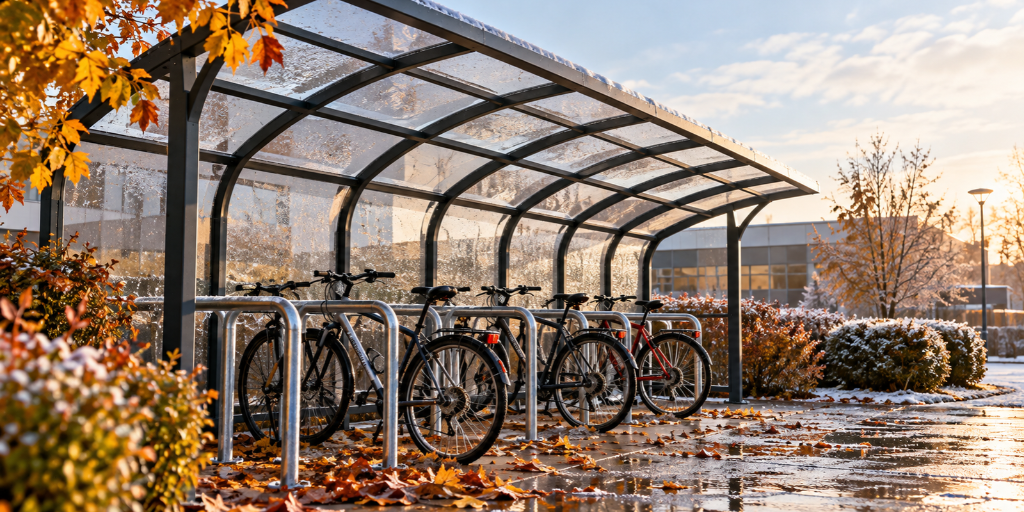
Autumn and winter can be demanding seasons for outdoor cycle shelters. Falling leaves, persistent rain, strong winds and freezing temperatures can expose problems that may have gone unnoticed during warmer months.
For schools, workplaces, universities and commercial premises, a damaged roof panel, blocked drainage outlet or deteriorating fixing can affect both the condition of a shelter and the safety of those using it.
Fortunately, preparing a cycle shelter for winter doesn’t always require major investment. A structured inspection, routine maintenance and timely repairs can help keep existing facilities in good working condition.
Whether you manage a school, office, hospital or commercial site, knowing what to check before the colder weather arrives can help you avoid unnecessary disruption and make better decisions about maintenance, repairs and replacement.
What Should You Check Before Winter Arrives?
Preparing a cycle shelter for autumn and winter starts with a thorough inspection of the structure and surrounding area. The framework, roofing, glazing, fixings, drainage, lighting and cycle stands should all be checked for visible signs of deterioration.
It’s equally important to consider the paths leading to the shelter. Standing water, fallen leaves and poor lighting can create problems even when the structure itself remains in good condition.
The Health and Safety Executive (HSE) recommends identifying and controlling slip and trip hazards, particularly where wet or slippery surfaces could put people at risk.
By carrying out these checks before severe weather arrives, facilities managers can identify which issues require routine maintenance and which need professional attention.
1. Inspect the Framework, Fixings and Anchoring
The framework provides the structural support for a cycle shelter, making it one of the most important areas to inspect.
Look for visible corrosion, bent sections, missing bolts, damaged connections or movement around the base. Pay particular attention to where the shelter is anchored to the ground, especially on exposed sites.
Many commercial cycle shelters use galvanised steel because its protective zinc coating helps resist corrosion. However, galvanised steel is not entirely maintenance-free. Damaged protective finishes, deteriorating connections and structural movement should still be investigated.
The Galvanizers Association provides further information about how galvanising protects steel against corrosion.
Facilities teams can carry out visual inspections and record any obvious defects. However, significant corrosion, distorted framework or suspected problems with structural anchoring should be assessed by a competent specialist.
If the shelter appears unstable, access should be restricted until it has been assessed and made safe.
2. Check Roofing and Glazing for Damage
A cycle shelter’s roof plays an important role in protecting bicycles from rain and other weather conditions. Before winter, inspect roofing sheets, glazing panels and their fixings for cracks, gaps, missing sections or signs of displacement.
Pay attention to panel edges and joints, where damaged connections may allow water to enter during wind-driven rain.
Depending on the shelter design, roofing materials may include PETG, polycarbonate or metal. Any replacement panels should be compatible with the original structure and fixing system.
Not every damaged panel means the entire shelter needs replacing. Where the supporting framework remains suitable, replacing individual components may be a practical solution.
However, loose or severely cracked panels should be addressed promptly, particularly where they could fall or expose sharp edges.
Roof inspections should always be carried out safely. The HSE’s working at height guidance explains the precautions required where elevated access or maintenance work is necessary.
3. Clear Leaves and Maintain Proper Drainage
Fallen leaves may seem harmless, but they can cause problems when they accumulate around shelter roofs, gutters and drainage outlets.
Blocked drainage can prevent rainwater from flowing away properly, allowing puddles to form around cycle stands and entrances. During freezing weather, standing water may turn to ice, increasing the risk of slips.
The HSE’s slips and trips guidance highlights the importance of managing hazards caused by wet and slippery surfaces.
Before winter, remove leaves and debris from safely accessible drainage outlets, clear surrounding walkways and check whether rainwater is draining away from the shelter.
If puddles repeatedly appear in the same location, the problem may involve the surrounding ground levels or drainage system rather than simply fallen leaves.
Investigating the underlying cause can help prevent the same issue from returning throughout winter.
4. Consider How Exposed Your Cycle Shelter Is to Winter Weather
Not every cycle shelter experiences the same weather conditions.
A shelter positioned in an open car park may be more exposed to strong winds than one located between buildings. Shelters beneath trees may need more frequent leaf clearance, while shaded locations can remain icy for longer.
When inspecting an existing shelter, consider the surrounding environment. Are nearby trees causing recurring debris problems? Does water regularly collect around the foundations? Has the structure experienced damage during previous storms?
These observations can help determine whether additional maintenance or improvements may be necessary.
Following severe winds or snowfall, check for displaced panels, fallen branches and visible structural damage.
Where there are concerns about wind resistance, snow loading or structural stability, seek advice from the manufacturer or a competent structural professional. A shelter’s ability to withstand severe weather depends on its design, installation, anchoring and site conditions.
5. Review Lighting, Accessibility and Cycle Security
As daylight hours shorten, employees, pupils and visitors may arrive at or leave cycle shelters in darkness.
Poor lighting can make it difficult to see entrances, locking points and obstacles along surrounding pathways. This is particularly important where shelters are positioned away from main buildings.
Active Travel England’s cycle parking guidance recommends that cycle parking and the routes leading to it should be secure, overlooked, well-maintained and well-lit.
Check whether existing lighting provides sufficient visibility and whether failed fittings need replacing. Surrounding paths should also remain clear of obstructions.
Cycle security deserves attention too. Inspect existing stands for damaged fixings, movement or deterioration, and check that users can lock their bicycles securely.
The Department for Transport’s Local Transport Note 1/20 provides guidance on cycle parking design, accessibility and security.
For organisations experiencing increased demand or security concerns, upgrading to more secure cycle storage may be worth considering.
6. Prepare Surrounding Paths for Frost and Ice
A well-maintained cycle shelter is less useful if cyclists cannot reach it safely.
Shaded walkways, sloping surfaces and areas where rainwater collects can become particularly slippery during colder weather.
The HSE advises organisations to identify outdoor areas vulnerable to frost and ice and introduce appropriate precautions, including gritting where necessary.
For facilities managers, this means considering the entire route to the cycle shelter rather than focusing only on the structure itself.
Keep paths clear of fallen leaves, monitor areas prone to standing water and ensure winter maintenance arrangements are in place before freezing conditions develop.
Where access routes become unsafe, temporary restrictions or alternative routes may be necessary until the problem has been resolved.
Further advice is available through the HSE’s slips and trips guidance.
7. Should You Repair, Refurbish or Replace Your Cycle Shelter?
An ageing cycle shelter doesn’t automatically need replacing. In many cases, the problem may involve individual components rather than the entire structure.
Cracked glazing, deteriorated coatings and certain damaged fittings may be suitable for repair or refurbishment, provided the supporting framework remains structurally sound.
However, significant corrosion, damaged anchoring, distorted framework or unsafe foundations may require more extensive work.
The key is to understand the difference between cosmetic deterioration and defects that could affect structural safety.
For organisations working with limited maintenance budgets, assessing an existing shelter before deciding to replace it can help avoid unnecessary expenditure.
Through its associated service, Fix My Shelter, Tamstar can help organisations explore refurbishment options, including replacement glazing and framework recoating.
Where the existing structure is no longer suitable, Tamstar also supplies a range of commercial cycle shelters and bike storage solutions for schools, workplaces and other organisations.
The right decision should depend on structural condition, practical requirements, capacity and the overall cost of the work.
8. Create a Simple Autumn and Winter Maintenance Routine
Preparing a cycle shelter for winter shouldn’t be a one-off task.
A simple maintenance routine can help facilities teams identify problems early and keep track of repairs throughout the colder months.
Start with a thorough inspection during autumn, followed by regular visual checks based on the shelter’s condition, site exposure and the manufacturer’s recommendations.
Pay particular attention to:
- Framework and fixings: Check for corrosion, movement and visible damage.
- Roofing and glazing: Look for cracks, loose panels and water ingress.
- Drainage: Clear leaves and investigate standing water.
- Lighting and access: Check visibility and keep surrounding paths clear.
- Cycle stands: Inspect fixings, stability and locking arrangements.
- Winter hazards: Monitor frost, ice and slippery surfaces.
- Storm damage: Carry out additional inspections following severe weather.
Keep photographs and maintenance records so that recurring problems can be identified and outstanding repairs can be followed up.
For organisations reviewing their wider facilities, Tamstar’s Complete Guide to Bike Storage for Autumn and Winter provides further advice on choosing suitable cycle storage arrangements.
Frequently Asked Questions
How Often Should a Cycle Shelter Be Inspected?
Inspection frequency depends on the manufacturer’s recommendations, site usage, weather exposure and risk assessment. Additional checks may be necessary following severe storms or reports of damage.
Can Damaged Cycle Shelter Panels Be Replaced?
Yes, in many cases. Individual roofing or glazing panels may be replaceable where the supporting structure remains suitable. Replacement materials and fixings must be compatible with the original shelter design.
What Are the Warning Signs of an Unsafe Cycle Shelter?
Potential warning signs include structural movement, bent framework, significant corrosion, damaged anchoring and loose panels that could fall. Where structural safety is uncertain, access should be restricted until a competent assessment has been carried out.
Are Galvanised Steel Cycle Shelters Suitable for Winter?
Galvanised steel provides corrosion protection and is commonly used in outdoor structures. However, winter suitability also depends on the shelter’s overall design, installation, condition and maintenance.
Is It Better to Refurbish or Replace an Old Cycle Shelter?
Refurbishment may be appropriate where the structure remains sound and individual components can be repaired. Replacement may be more suitable where significant structural damage, insufficient capacity or an unsuitable design makes continued use impractical.
Keep Your Cycle Shelter Ready for the Colder Months
Preparing a cycle shelter for autumn and winter is about more than protecting bicycles from the weather. It’s about keeping an important facility safe, accessible and reliable throughout the colder months.
By inspecting structural components, maintaining drainage, reviewing lighting and security, and addressing damage promptly, organisations can make informed maintenance decisions and reduce avoidable disruption.
Whether your existing shelter needs refurbishment or your site requires additional cycle parking, Tamstar can help you explore suitable options.
Planning improvements to your cycle storage? Explore Tamstar’s cycle shelters and bike storage range or contact the Tamstar team to discuss your requirements and request a quotation.