As more UK organisations invest in sustainability, staff wellbeing, and active travel initiatives, cycle shelters have become an essential addition for businesses, schools, colleges, and public sector facilities. Whether you are looking to encourage cycling to work, improve bike security for students, or meet modern planning expectations, choosing the right cycle shelter can make a significant long-term difference.
At Tamstar Ltd, businesses and schools across the UK are increasingly investing in secure, weather-protected cycle storage solutions that improve safety, reduce theft risks, and support greener travel habits. With many organisations now prioritising environmental goals and employee wellbeing, cycle shelters are no longer seen as an optional extra; they are becoming a practical workplace and education essential.
Why Cycle Shelters Are Important in 2026
Cycling continues to grow across the UK as organisations encourage healthier and more sustainable commuting methods. Government-backed active travel initiatives and Cycle to Work schemes have increased interest in cycling infrastructure across schools and workplaces.
For schools, cycle shelters help promote healthier lifestyles while reducing congestion during drop-off and pick-up times. For businesses, providing secure cycle parking demonstrates a commitment to employee wellbeing, sustainability, and modern workplace facilities.
Secure cycle parking is now considered an important factor influencing whether people choose to cycle regularly.
What Is a Cycle Shelter?
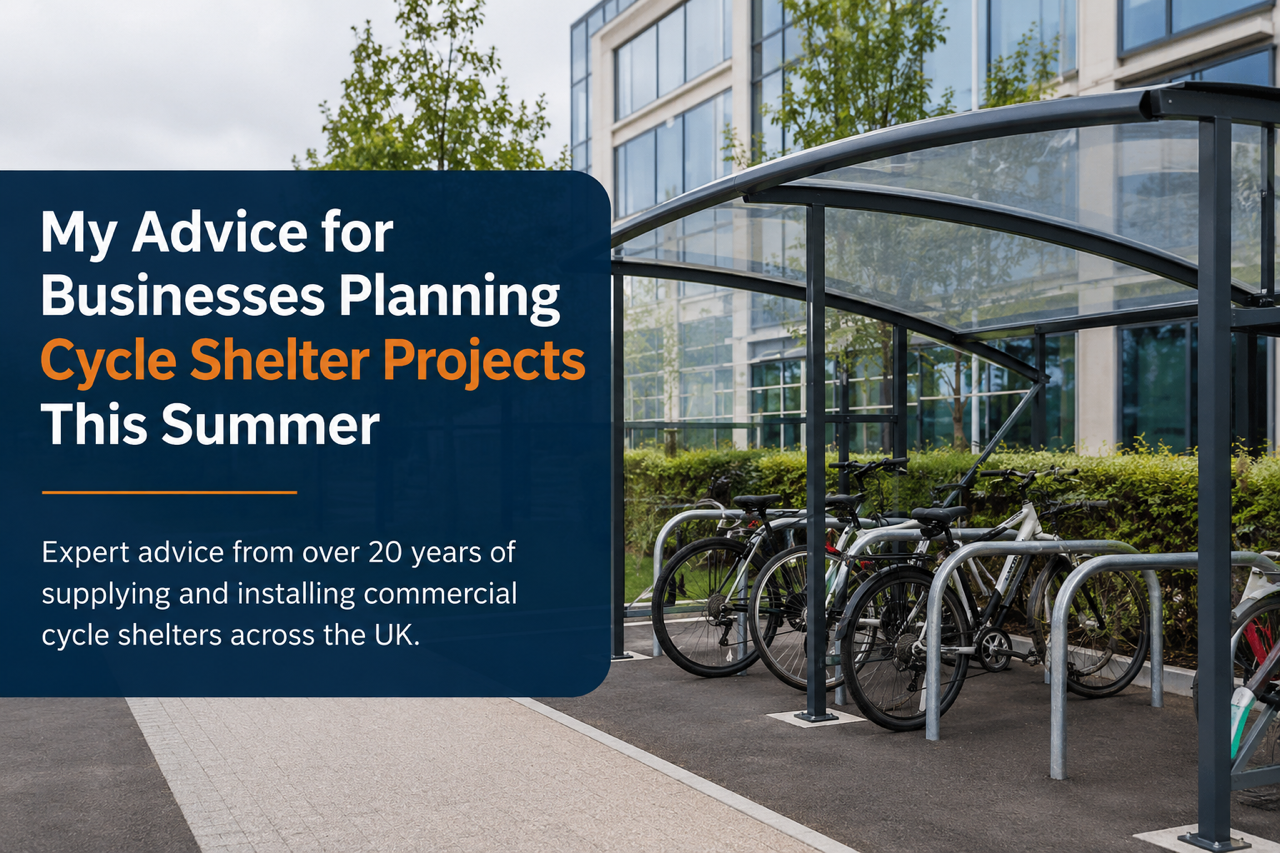
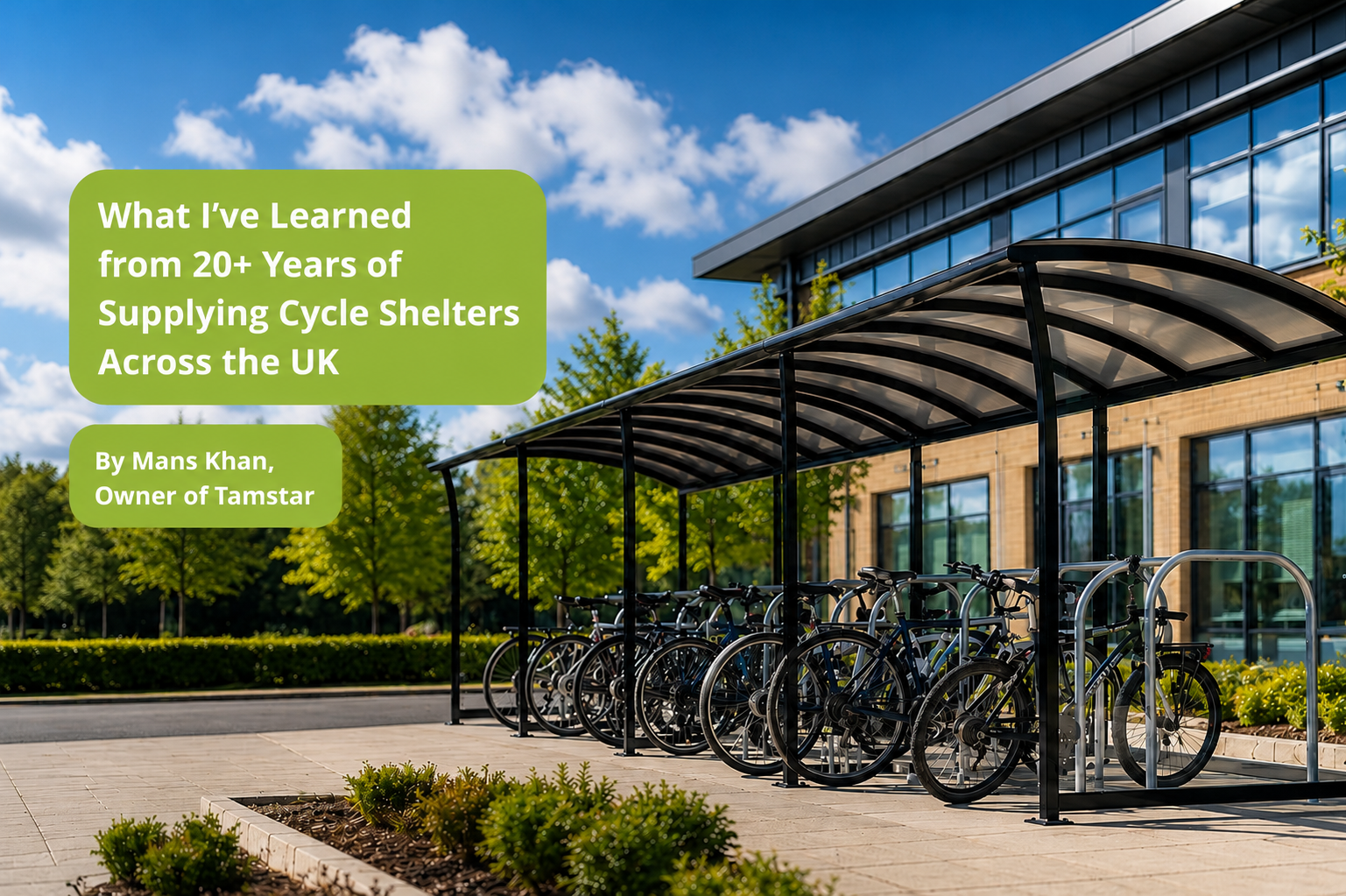
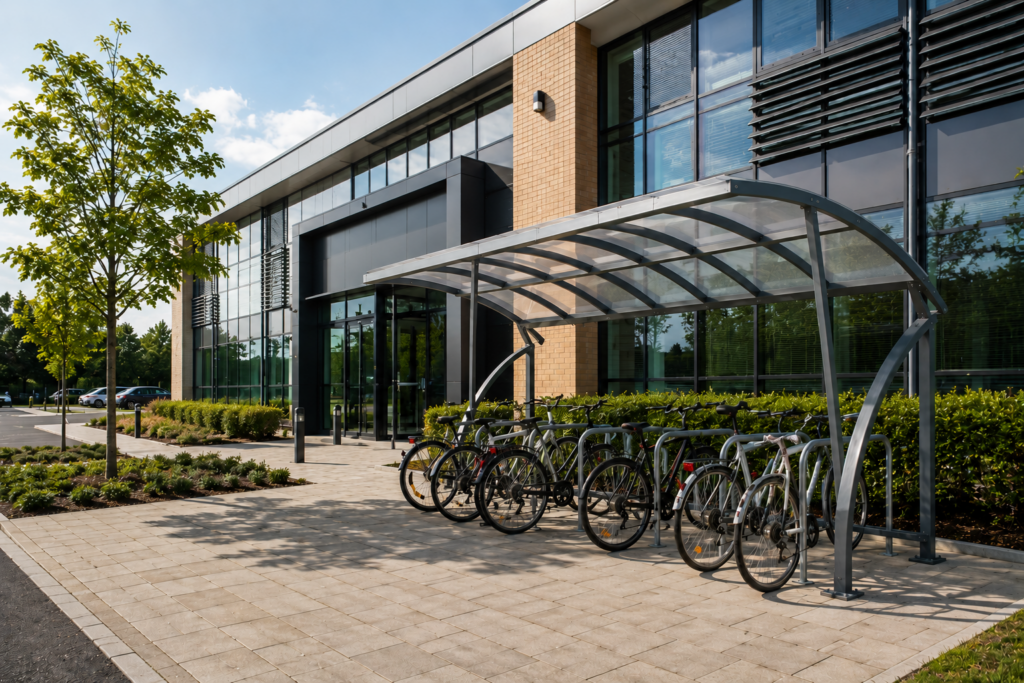
A cycle shelter is a covered structure designed to securely store bicycles and scooters outdoors. Most commercial cycle shelters are manufactured using galvanised steel frameworks combined with durable roofing and optional side panels for additional weather protection.
Modern cycle shelters are commonly installed at:
- Schools and academies
- Universities and colleges
- Office buildings
- Hospitals and NHS facilities
- Retail parks
- Industrial estates
- Leisure centres
- Public transport hubs
Many organisations now choose bespoke cycle shelters that can be tailored to available space, user numbers, branding requirements, and security needs.
Key Things to Consider Before Buying a Cycle Shelter
1. Capacity Requirements
One of the first questions to ask is how many bicycles need to be stored both now and in the future.
Businesses often underestimate demand once cycling facilities become available. Schools, especially, can experience increased cycling uptake after installing attractive and secure bike shelters.
Consider:
- Current number of cyclists
- Future growth plans
- Staff and visitor usage
- Student capacity
- Scooter storage requirements
It is often more cost-effective to install a slightly larger shelter initially rather than expanding later.
2. Security Features
Security is one of the most important factors when selecting cycle storage solutions.
Poorly designed cycle parking can increase theft risks and discourage usage. UK cycle parking guidance recommends secure, visible, and well-lit locations.
Look for features such as:
- Integrated cycle stands
- Lockable compounds
- Mesh side panels
- Anti-vandal materials
- CCTV compatibility
- Secure anchor points
- Covered access
Businesses and schools located in urban environments may benefit from enclosed cycle compounds for additional protection.
3. Weather Protection
The UK weather can be unpredictable throughout the year, making weather protection a major consideration.
Covered cycle shelters protect bicycles from:
- Rain
- Snow
- UV exposure
- Rust and corrosion
- General wear and tear
For schools, especially covered cycle parking encourages students to continue cycling throughout the winter months.
Government and active travel guidance increasingly recommends covered cycle parking facilities for educational and workplace settings.
4. Shelter Materials and Durability
Commercial cycle shelters should be built to withstand long-term outdoor exposure.
Popular materials include:
- Galvanised steel
- Powder-coated steel
- Polycarbonate roofing
- PETG glazing panels
- Aluminium frameworks
Galvanised steel remains one of the most popular options due to its strength, corrosion resistance, and low maintenance requirements.
Businesses and schools should also consider whether replacement glazing panels and refurbishment services are available in future years.
5. Planning and Compliance Considerations
In many UK developments, cycle parking standards are now treated as an important planning consideration.
Local authorities increasingly expect:
- Safe cycle access
- Secure parking provision
- Accessibility compliance
- Sustainable transport support
Educational facilities may also need to align with travel plan requirements, encouraging active travel for pupils and staff.
Before installation, organisations should consider:
- Available footprint space
- Ground conditions
- Accessibility routes
- Drainage
- Lighting
- Proximity to entrances
Guidance recommends that cycle parking should be visible, secure, and ideally closer to entrances than car parking areas.
Best Types of Cycle Shelters for Businesses
Open Front Cycle Shelters
These are one of the most common commercial cycle shelter designs. They provide excellent weather protection while maintaining easy access and visibility.
Ideal for:
- Offices
- Retail parks
- Business parks
- Staff parking areas
Enclosed Cycle Compounds
Enclosed cycle shelters provide enhanced security using mesh panels and lockable access systems.
Ideal for:
- High-value bicycles
- City centre offices
- Universities
- Public transport facilities
Cantilever Cycle Shelters
Cantilever designs provide modern aesthetics with fewer support posts, creating cleaner access routes and improved manoeuvrability.
Ideal for:
- Contemporary commercial buildings
- Architectural projects
- Schools with limited access to space
Bespoke Cycle Shelters
Some organisations require fully customised solutions to suit unusual layouts, branding requirements, or larger capacity needs.
Bespoke shelters can include:
- Corporate branding colours
- Solar lighting
- Integrated lockers
- Scooter storage
- Additional seating
- Multi-use shelter systems
Best Cycle Shelters for Schools
Schools often require durable and low-maintenance cycle shelters capable of handling high daily usage.
Important considerations include:
- Safety
- Visibility
- Vandal resistance
- Capacity
- Ease of supervision
Many schools now install brightly coloured powder-coated shelters to improve visual appeal and encourage active travel among pupils.
Cycle shelters can also help schools support sustainability initiatives and healthier commuting habits.
Why Businesses Are Investing in Cycle Storage
Providing cycle shelters offers several long-term benefits for organisations.
Employee Wellbeing
Cycling can support physical health, mental wellbeing, and workplace productivity.
Sustainability Goals
Cycle shelters support environmental targets by encouraging greener commuting options.
Reduced Parking Pressure
Encouraging cycling can reduce demand for car parking spaces on busy sites.
Improved Workplace Facilities
Modern staff facilities can improve employee satisfaction and help attract talent.
Support for Active Travel Initiatives
Many councils and organisations continue promoting cycling infrastructure through active travel programmes and funding opportunities.
Maintenance and Refurbishment
Like all outdoor structures, cycle shelters may eventually require maintenance or refurbishment.
Common refurbishment services include:
- Glazing panel replacement
- Recoating frameworks
- Fixing corrosion
- Replacing damaged roofing
- Upgrading cycle stands
Refurbishment can often provide a more cost-effective and sustainable alternative to complete replacement.
Choosing the Right Supplier
When buying a commercial cycle shelter, choosing an experienced supplier is just as important as choosing the shelter itself.
Look for a supplier that offers:
- UK-wide installation
- Bespoke design options
- Refurbishment services
- Durable materials
- Industry experience
- Ongoing support
Tamstar Ltd supplies a wide range of cycle shelters, smoking shelters, canopies, and outdoor facility products for schools, businesses, councils, and commercial organisations throughout the UK. Their solutions are designed to provide secure, durable, and practical outdoor infrastructure tailored to each site’s requirements.
Final Thoughts
Investing in the right cycle shelter is about more than simply storing bicycles. It is about creating safer, healthier, and more sustainable environments for staff, students, and visitors.
Whether you are upgrading school cycling facilities, supporting active travel in the workplace, or improving site security, choosing the correct cycle storage solution can deliver long-term value and improve daily user experience.
As cycling infrastructure continues to grow in importance across the UK, organisations that invest in secure and attractive cycle shelters today will be better prepared for the future of sustainable travel.