As the summer holidays end, schools across the UK are preparing classrooms, checking equipment and getting their sites ready for another busy academic year. But there is one area that can easily be overlooked during the back-to-school rush: school cycle storage.
September is a natural time for pupils and staff to establish new routines. For some families, that could mean leaving the car at home and choosing to walk, wheel or cycle to school instead.
With active travel becoming an increasingly important part of the UK’s approach to school journeys, now is a good time for schools, academies and colleges to ask a simple question:
Is our cycle storage actually ready for September?
Why School Cycle Storage Matters More in 2026
Encouraging active travel isn’t simply about getting more children on bikes.
Good cycle storage for schools can form part of a wider strategy to reduce congestion around school entrances, support healthier journeys and make cycling a practical option for pupils and staff.
This is particularly relevant in 2026.
The Government’s third Cycling and Walking Investment Strategy (CWIS3), published in June 2026, places a strong emphasis on helping more children walk, wheel and cycle to school. Its plans include developing safer routes between schools, homes and high streets, alongside support for programmes that encourage active travel.
For schools, however, encouraging pupils to cycle also means thinking about what happens when they arrive.
If pupils have nowhere convenient and secure to leave their bicycles, even a good cycle route only solves part of the problem.
That makes safe, accessible and appropriately sized school bike storage an important part of the overall active-travel picture.
1. Is Your Existing Cycle Storage Big Enough?
Start by reviewing capacity.
Are your existing cycle racks regularly full? Are bicycles being locked to fences, railings or other unsuitable areas? Could demand increase when pupils return in September?
A school that currently has space for ten bicycles may discover that it needs considerably more as active travel becomes more popular.
It is worth considering not only current usage but potential future demand. A modular cycle shelter or larger cycle storage system can provide greater flexibility where pupil numbers or cycling levels are expected to increase.
Tamstar supplies cycle storage solutions ranging from smaller shelters and stands through to larger systems capable of accommodating substantial numbers of bicycles.
2. Are Bikes Protected from the British Weather?
September also means autumn isn’t far away.
Rain, wind and colder weather can quickly make uncovered cycle parking less appealing. Pupils may be less enthusiastic about cycling to school if their bike and saddle are left exposed to heavy rain throughout the day.
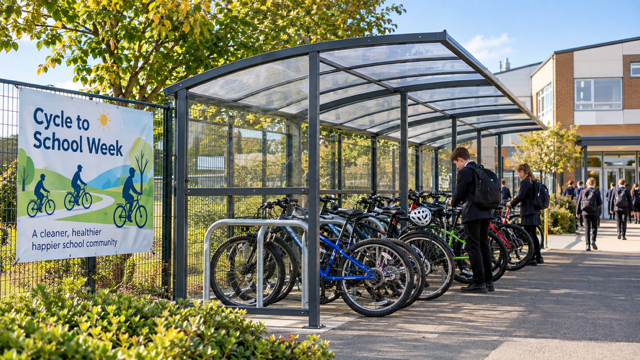
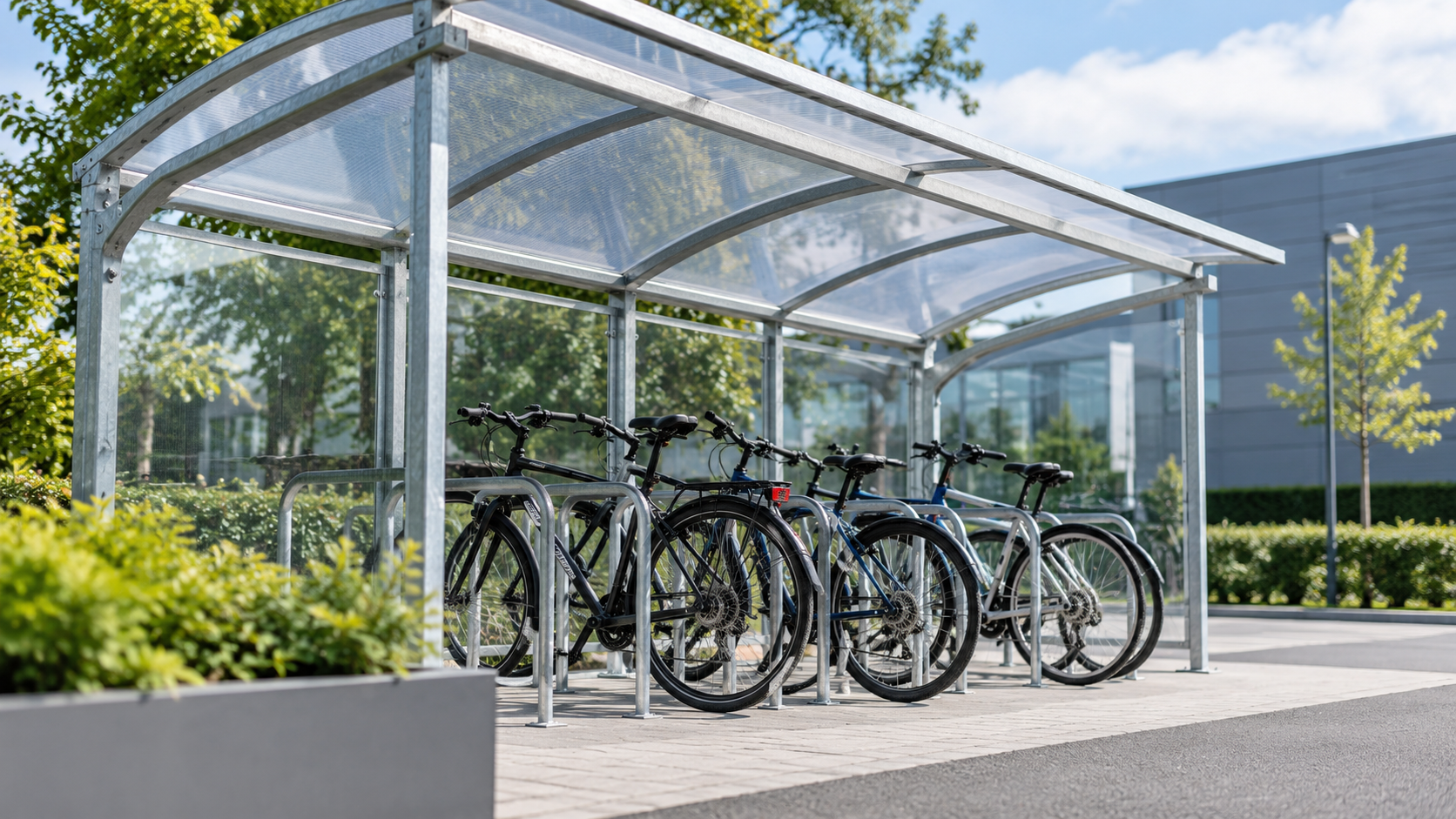
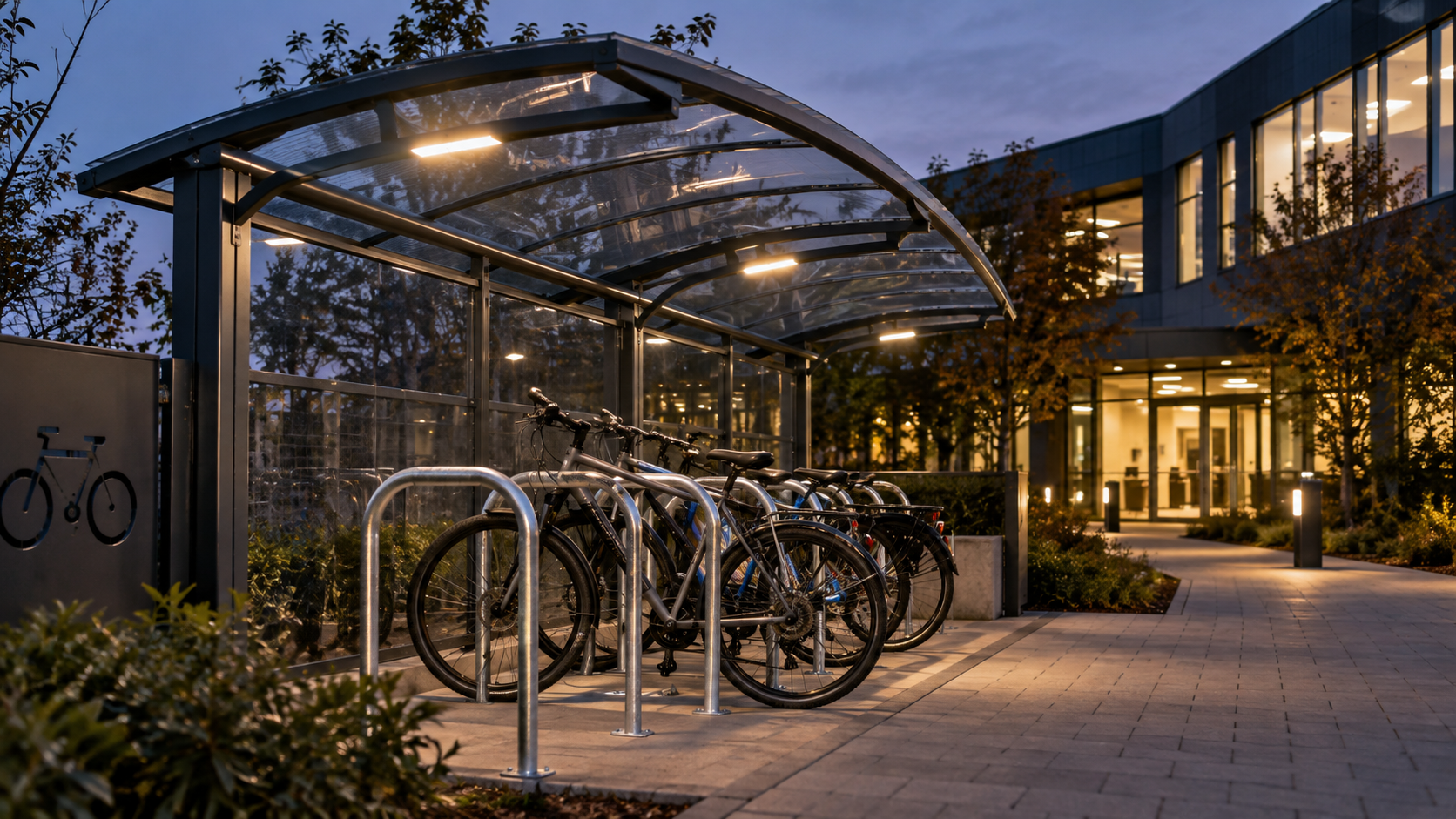
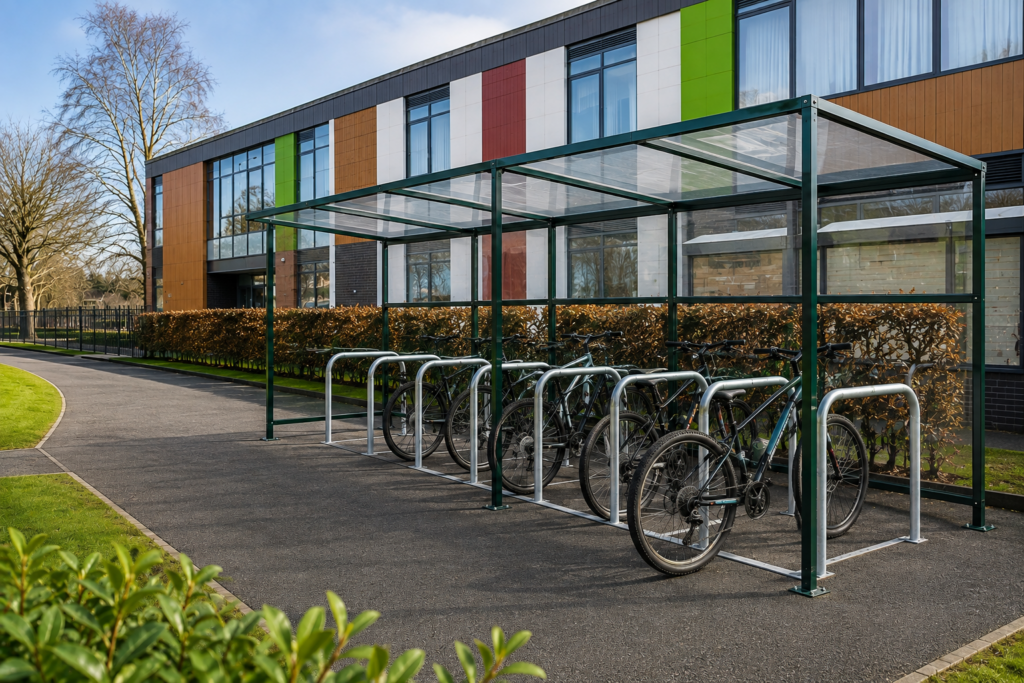
A covered cycle shelter for schools provides valuable protection from the elements and creates a clearly designated location for bicycles.
It can also make the school’s cycle facilities look more organised and considered than a collection of uncovered stands positioned around the site.
For schools trying to encourage year-round cycling rather than occasional summer cycling, weather protection should be an important consideration.
3. How Secure Is Your School Bike Storage?
Security is another important consideration.
Parents and pupils need confidence that bicycles can be locked securely during the school day.
When reviewing your existing school cycle parking, consider:
- whether cycles can be secured properly to the stands.
- whether the storage area is overlooked or visible.
- whether racks or stands are securely fixed.
- whether access needs to be controlled.
- whether a lockable cycle compound would be more appropriate.
Different schools will require different levels of security.
An open school cycle shelter with Sheffield stands may be appropriate for one site, while another may benefit from an enclosed or lockable cycle compound.
The objective should be to make storing a bicycle straightforward while providing an appropriate level of security for the location.
4. Is the Cycle Storage in the Right Location?
Where cycle storage is positioned can be almost as important as the shelter itself.
A poorly located shelter at the far end of a site may discourage use, particularly if pupils need to navigate busy vehicle areas to reach it.
Ideally, bike storage for schools should be convenient for cyclists while avoiding unnecessary conflict with cars, delivery vehicles and pedestrians.
Schools reviewing their facilities should consider:
Visibility: Is the storage positioned somewhere reasonably visible?
Access: Can pupils reach it safely with their bicycles?
Convenience: Is it close enough to the buildings it serves?
Vehicle movements: Can cyclists reach the storage without crossing busy drop-off, staff parking or delivery areas unnecessarily?
The Department for Transport’s cycle infrastructure guidance includes cycle parking as an important part of high-quality cycling infrastructure. A well-designed journey therefore shouldn’t end at the school gates; the final parking arrangement matters too.
5. Don’t Forget Scooters
For primary schools in particular, cycling may only represent part of the active-travel demand.
Scooters are also a popular way for younger pupils to travel.
If scooters are regularly being left against walls, fences or entrances, a combined bike and scooter shelter for schools could provide a more organised solution.
Tamstar offers school storage options designed for bicycles and scooters, allowing schools to choose a system that reflects how their pupils actually travel.
6. Inspect Existing Cycle Shelters Before Replacing Them
Not every ageing shelter needs replacing.
The summer break is an ideal opportunity to inspect existing school cycle shelters for:
- damaged or missing panels
- corrosion or coating deterioration
- loose or damaged cycle stands
- damaged fixings
- roof or glazing problems
- general wear and tear
Where the main structure remains sound, cycle shelter refurbishment may be a practical alternative to complete replacement.
Repairing panels, recoating steelwork or replacing damaged cycle racks can potentially extend the life of an existing structure while improving its appearance ahead of the new academic year.
Active Travel and the School Run
Active Travel England and the Department for Transport are also supporting School Streets and other initiatives designed to make journeys around schools safer and encourage more walking, wheeling and cycling.
Government guidance notes that around 40% of primary school pupils and 25% of secondary school pupils in England are driven to school by car or van.
Reducing unnecessary car journeys can potentially help schools and surrounding communities address congestion, emissions and road-safety concerns at busy drop-off and collection times.
Cycle storage alone won’t transform school travel habits, but it is an important piece of the puzzle.
If a school encourages pupils to cycle, it needs somewhere practical for those bicycles to go.
Your September School Cycle Storage Checklist
Before pupils return, facilities managers, school business managers and estates teams should check:
✓ Do we have enough cycle parking spaces?
✓ Are the stands and shelters in good condition?
✓ Can bicycles be securely locked?
✓ Is the storage protected from the weather?
✓ Is it positioned in a safe and convenient location?
✓ Do we need additional scooter storage?
✓ Could our existing shelter be refurbished rather than replaced?
✓ Do we have enough capacity if cycling increases?
If several of those questions raise concerns, the summer holidays provide an excellent opportunity to review your school’s requirements.
Choosing Cycle Storage for Your School
There isn’t one cycle-storage solution that suits every educational site.
A small primary school might require a compact shelter accommodating bicycles and scooters. A secondary school, academy, college or multi-academy trust may need considerably greater capacity, potentially incorporating multiple racks, shelters or secure cycle compounds.
At Tamstar Ltd, we supply a range of cycle shelters for schools, school bike shelters, cycle racks, Sheffield stands, scooter storage and secure cycle compounds for educational and commercial sites across the UK.
Our range includes solutions for smaller installations as well as larger-capacity cycle storage, helping schools select facilities appropriate to their available space, expected usage and budget.
We can also help organisations looking to refurbish existing cycle shelters rather than automatically replacing them.
Get Your School Cycle Storage Ready for September
September provides a fresh start for pupils — and often for their travel habits too.
Providing secure, weather-protected and convenient cycle storage at school sends a clear message that cycling is welcomed and supported.
Whether you need a few additional cycle stands, a covered school bike shelter, combined bike and scooter storage, a secure cycle compound or advice about refurbishing an existing shelter, planning before the new term can help ensure your facilities are ready from day one.
Explore Tamstar’s range of cycle shelters and school cycle storage solutions or contact our team to discuss the right option for your school.