Government investment in walking and cycling is entering an important new phase in England.
The Government’s third Cycling and Walking Investment Strategy (CWIS3), published in June 2026, projects more than £4.5 billion of investment in active travel between 2025 and 2030. The aim is not simply to build more cycle lanes, but to make walking, wheeling and cycling safer, easier and better connected as part of everyday transport.
For cyclists, that could mean safer routes, better crossings, fewer gaps between existing routes and improved connections between homes, schools, workplaces, high streets and public transport.
But a successful cycle network also needs to work at the end of the journey. Once cyclists reach a school, workplace or other destination, they need somewhere convenient and secure to leave their bikes.
So, how could the latest government funding make a practical difference to cyclists, and what should organisations be thinking about as local cycling networks improve?
How much is the Government investing in cycling?
Under the third Cycling and Walking Investment Strategy, the Government projects £4.555 billion of active-travel investment across England between 2025 and 2030.
It is important to understand what that figure represents.
It is not a single £4.5 billion fund exclusively for cycle lanes. The Government says the projected investment includes approximately £1.1 billion of funding for Active Travel England, alongside investment from the wider Department for Transport and other government funding streams.
CWIS3 has three main objectives: to enable more people to benefit from physical activity through active travel, make active travel an easier and more integrated transport choice, and improve safety for people walking, wheeling and cycling.
The Government has also set a target for 55% of short journey stages in towns and cities to be walked or cycled by 2035.
This means the focus is increasingly on creating connected networks rather than simply delivering isolated sections of infrastructure.
What is Active Travel England?
Active Travel England is the government executive agency responsible for helping make walking, wheeling and cycling better choices for everyday journeys in England.
Its role includes supporting local authorities, helping improve the quality of active-travel infrastructure and contributing to the delivery of the Government’s wider cycling and walking strategy.
In December 2025, Active Travel England announced that councils across England had received more than £626 million in government funding for walking, wheeling and cycling schemes. The agency said the investment was sufficient to support around 500 miles of new and upgraded routes.
More recently, in September 2026, the Government announced a further £104 million investment in the National Cycle Network, funding hundreds of projects and wider improvements including maintenance, more accessible routes and safer crossings.
For cyclists, however, the important question is not simply how much money is being invested. It is what changes they could actually notice when making everyday journeys.
1. Safer cycle routes could make everyday cycling more practical
One of the biggest barriers to cycling can be the journey itself.
A person may be comfortable cycling along a quiet residential road or protected cycle route, only to reach a busy junction or a section where the cycling provision suddenly disappears.
Improving individual sections is useful, but a route becomes far more practical when those sections form part of a coherent network.
CWIS3 sets out plans to connect existing, planned and future active-travel schemes and establish the foundations of a national active-travel network.
For cyclists, that could mean fewer missing links and safer, more continuous journeys between the places people actually need to reach.
2. Safer crossings could remove difficult points in a journey
A good cycle route can quickly become less attractive when it reaches a difficult road crossing or junction.
These points are particularly important for children, families, less confident cyclists and people who are considering cycling but do not yet feel comfortable mixing with busy traffic.
Alongside CWIS3, the Government has set an ambition for 5,000 new walking, wheeling and cycling routes and 10,000 safer crossings over five years.
If delivered well, improvements such as these could help remove some of the points where an otherwise usable journey currently becomes difficult.
3. Better connections could make cycling useful for more than leisure
For cycling to become a realistic everyday transport choice, routes need to connect people with useful destinations.
That means linking residential areas with places such as:
- schools and colleges;
- workplaces;
- town and city centres;
- high streets and local services;
- railway stations and other public transport connections.
CWIS3 specifically emphasises creating safe, coherent networks connecting schools, high streets and homes.
This is an important distinction.
The benefit of investment in the cycle network is not simply that there may be more places to cycle recreationally. It could make cycling a more practical option for journeys people already need to make.
4. Children and less confident cyclists could receive more support
Physical infrastructure alone will not persuade everybody to cycle.
Some people need the skills and confidence to use it.
In May 2026, Active Travel England confirmed more than £108 million of funding over three years for active-travel programmes, including cycle training and initiatives encouraging children to walk, wheel and cycle to school.
That package includes substantial funding for Bikeability cycle training.
Combining good infrastructure with training is important because the two solve different problems. A safer route can remove physical barriers, while training can help people develop the skills and confidence to use it.
5. The National Cycle Network should become safer and better connected
The September 2026 announcement of £104 million for the National Cycle Network provides another practical example of where investment is heading.
According to Active Travel England, the funding will support hundreds of projects and wider network improvements across England, including maintenance, safer crossings and accessibility improvements.
For existing cyclists, maintaining and improving established routes can be just as important as building new ones.
A damaged, poorly connected or difficult-to-use section can undermine an otherwise good journey. Improving existing infrastructure alongside creating new routes can therefore help make the network more dependable.
But what happens when the cycle route ends?
There is another part of the cycling journey that can easily be overlooked.
Imagine an employee who now has a safer cycle route from home to work.
The route is well connected. Difficult crossings have been improved. They feel comfortable cycling to work rather than driving.
Then they arrive and discover there is nowhere suitable to leave their bicycle.
The journey has improved, but the experience is still incomplete.
Active Travel England’s own guidance recognises this issue. It states that secure cycle parking for homes, workplaces and other destinations can maximise opportunities for cycling for everyday journeys. It also recommends planning cycle parking with future growth in cycling in mind.
For longer stays, its guidance recommends parking that is easy to access, covered and well overlooked, with secure access considered at workplaces and educational establishments.
This creates an important link between investment in the public cycle network and the facilities provided at individual destinations.
Why cycle parking is part of the wider cycling network
A useful way to think about cycling infrastructure is as a complete journey:
Home → safe local route → connected cycle network → crossings → destination → cycle parking
Each part affects whether cycling feels practical.
Government and local-authority investment can improve much of the public network. Schools, employers, universities, healthcare organisations and other site operators can consider what happens once cyclists cross onto their property.
If local routes improve and more people begin cycling, organisations may need to ask:
Do our facilities match the cycling infrastructure developing around us?
That does not automatically mean installing a new cycle shelter. The starting point should be understanding current and likely future demand.
Are existing racks regularly full? Are bicycles being secured to railings or fences? Is the current parking exposed to the weather? Is it conveniently positioned? Could nearby active-travel improvements increase the number of people cycling to the site?
These questions can help organisations decide whether existing provision remains suitable.
What should organisations consider when planning cycle storage?
Good cycle parking should be planned around the people who will actually use it.
Capacity is important, but so are location, accessibility, security and protection from the weather.
A large cycle shelter positioned inconveniently may be less useful than appropriately sized storage located where cyclists naturally arrive.
Active Travel England advises that long-stay cycle parking should be easy to access, covered and well overlooked. It also highlights the need to consider different types of cycles, including cargo bikes and adapted cycles.
For organisations considering new facilities, this means thinking beyond simply asking, “How many bikes can we fit?”
It is also worth considering:
Where do cyclists enter the site?
Cycle parking should connect logically with the routes people use.
How long will bikes be left there?
An employee leaving a bicycle for eight hours may have different requirements from a visitor stopping for ten minutes.
How much security is appropriate?
Some sites may only require cycle stands, while others may benefit from covered shelters or more secure enclosed cycle storage.
Could demand increase?
If local cycling infrastructure is improving, designing only for today’s usage could result in inadequate capacity later.
How Tamstar can support the final part of the cycling journey
Tamstar supplies cycle-storage solutions for schools, workplaces, commercial premises and public-sector sites across the UK.
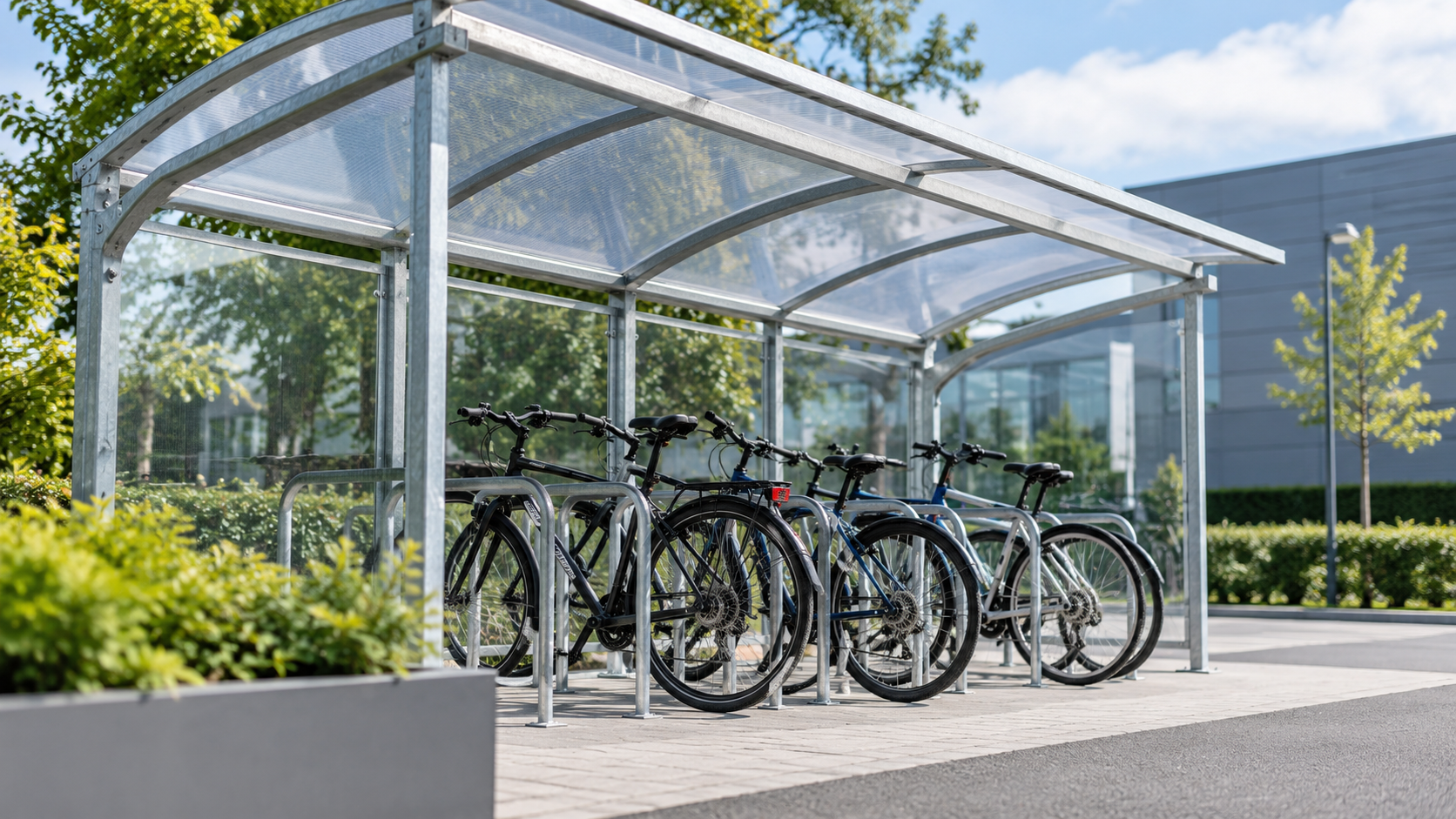
Depending on the site and its requirements, this can include cycle shelters, Sheffield stands, bike racks and secure cycle compounds.
The right solution will depend on factors such as available space, expected cycle numbers, site layout, security requirements and how people move around the site.
For organisations reviewing their facilities, the aim should not simply be to install more equipment. It should be to create cycle parking that fits naturally into the journey cyclists are making.
Our guide to where to install a cycle shelter explains some of these practical considerations in more detail, including visibility, accessibility and how the shelter relates to the wider site.
A better cycle network needs to work from beginning to end
Government funding has the potential to make a meaningful difference to cyclists in England.
The projected £4.5 billion of active-travel investment under CWIS3, council funding, cycle-training programmes and the latest investment in the National Cycle Network all point towards a broader ambition: making cycling a safer and more practical part of everyday transport.
For cyclists, success will ultimately be measured less by the size of the funding announcements and more by what changes on the ground.
Can they reach work more safely?
Can children cycle to school on a coherent route?
Are difficult crossings easier to navigate?
Do routes connect with the places people actually want to reach?
And, when they arrive, is there somewhere suitable to leave their bike?
That final question matters.
A cycle network does not really finish at the end of a cycle lane. For the person making the journey, it finishes when their bicycle is safely parked, and they can continue with their day.
If your school, workplace or organisation is reviewing its cycle-storage provision as active-travel infrastructure develops around your site, explore Tamstar’s range of cycle shelters and bike storage, or speak to our team about capacity, location and the most appropriate solution for your site.
Frequently Asked Questions
How much is the Government investing in cycling and walking in England?
The third Cycling and Walking Investment Strategy projects £4.555 billion of active-travel investment between 2025 and 2030. This includes approximately £1.1 billion for Active Travel England alongside funding from wider government sources.
What is the Government’s target for cycling and walking?
By 2035, the Government wants 55% of short journey stages in towns and cities in England to be walked or cycled. CWIS3 also focuses on improving safety and making active travel an easier, more integrated transport choice.
What does Active Travel England do?
Active Travel England is the government executive agency responsible for supporting better walking, wheeling and cycling in England. Its work includes supporting local authorities, improving infrastructure standards and helping deliver national active-travel policy.
Why is cycle parking important if the Government is improving cycle routes?
Cyclists need appropriate facilities at both ends of their journey. A safer route can make cycling more attractive, but secure and conveniently located cycle parking helps make cycling practical when people reach workplaces, schools and other destinations.
Should organisations plan for future cycling demand?
Yes. Active Travel England recommends that cycle-parking provision takes future growth in cycling into account. Organisations may therefore benefit from considering both current usage and how local active-travel improvements could affect future demand.